Contact Us Careers
Breast Cancer

What is the primary risk of metastasis for 75% of breast cancer patients in the future? Be alert to these 5 signals

时间:2026-04-15 人气:
Click on the blue text in    to follow us


At 3 a.m., Ms. Wei, 55 years old, was awakened by a piercing pain in her waist, which she initially thought was just ordinary muscle strain. However, just two months later, after a minor bending action, she found herself unable to move her waist - this seemingly accidental back pain crisis was ultimately diagnosed as breast cancer bone metastasis.      

     
Patients like Ms. Wei are not isolated cases: 5% of breast cancer patients may present with bone metastasis at their initial visit, and 75% of patients may face the risk of developing bone metastasis in the next 10 years[1], with bones even becoming the first site of recurrence and metastasis in breast cancer. Why do cancer cells always have a "special preference" for bones? Are those neglected nocturnal bone pain and unexplained fractures sounding the alarm for metastasis?      


Ms. Wei was diagnosed with invasive ductal carcinoma in August 2021. As early as a year ago, she had noticed a lump in her left breast, but she dismissed it as "breast hyperplasia" due to its lack of pain or discomfort. It was this misdiagnosis that allowed the latent cancer cells to silently complete bone metastasis. Ms. Wei and her family deeply regretted missing the best treatment opportunity due to early neglect.      


Why is breast cancer prone to bone metastasis?            
Tumor cells locally invade to escape the surrounding tissues of the primary tumor, then invade blood vessels or lymphatic vessels, survive in the circulatory system, subsequently escape and extravasate from the circulatory system, and ultimately form metastatic foci. It is worth noting that the microenvironment of high calcium, low pH, and hypoxia within bone metastatic foci of breast cancer is conducive to tumor cell colonization, thereby promoting the formation and progression of bone metastasis.      

     
This also reminds us that breast cancer patients must protect their bones in advance and pay close attention to any abnormalities in their bones.      


The "signal" of bone metastasis, be sure to understand it
* Bone pain      
This is the most common symptom, which may manifest as intermittent or persistent pain, aggravated at night or during activity.      


* Pathological fracture      
Due to the destruction of bones by tumors, bones become fragile and prone to fractures during daily activities.      


Localized swelling and joint stiffness
Bone metastasis may lead to localized swelling and limited joint mobility.      


Symptoms of nerve compression      
Such as numbness, pain, weakness, and even paraplegia.      


Hypercalcemia      
Bone metastasis damages bones, releasing a large amount of calcium into the bloodstream, which may lead to hypercalcemia.      


01              


Disease Overview

Overview of the illness

Ms. Wei completed 8 cycles of chemotherapy from August 26, 2021, to March 2022, with the tumor shrinking from 19×12×13mm before chemotherapy to 5×3×4mm. On April 14, 2022, she underwent radical surgery. Postoperative staging was cT4bN2M1 stage IV, and pathology revealed invasive breast cancer with negative surgical margins, lymphovascular invasion (LVI), involvement of the nipple, no skin involvement, metastasis in 6/6 left axillary lymph nodes, and cancer infiltration in the remaining adipose tissue. Cancer infiltration was also observed in the left subclavian lymph nodes and caudal lobe nodules, which were fibrous adipose tissue. Immunohistochemical results showed: ER (strong+, >90%), PR (strong+, 70%), HER2 (2+), CK5/6 (-), Ki-67 (+, 20%).      

   
After surgery, Ms. Wei underwent 25 rounds of radiotherapy and 8 cycles of chemotherapy, followed by treatment with letrozole and abemacil.      

     
Although Ms. Wei was diagnosed with stage IV disease at the initial visit, she was given the opportunity for surgery through chemotherapy. However, postoperative pathology revealed the presence of risk factors such as extensive lymph node metastasis and vascular cancer thrombus. The bone imaging on May 10, 2023, showed increased bone metabolism in some thoracolumbar vertebrae, suggesting possible tumor metastasis, which may have an adverse impact on prognosis. Faced with such a dilemma, is it only possible to sit and wait for tumor recurrence?      

     
Ms. Wei and her family have been seeking new treatment methods to achieve long-term tumor control. They learned that Professor Zhang Minghui's vNKT cell therapy technology from Tsinghua University School of Medicine may offer a new hope for her treatment.      


Breast cancer bone metastasis: systemic treatment is key            
In patients like Ms. Wei, who have stage IV breast cancer with bone metastasis, the cunning tumor cells have already breached local defenses and invaded the bones and lymphatic system. If only relying on local radiotherapy or orthopedic surgery, it can only temporarily solve local problems, and residual tumor cells will make a comeback.      

     
vNKT cell therapy is demonstrating strategic advantages akin to "global pursuit" - vNKT cells can reach the entire body through the bloodstream, killing evasive tumor cells. Simultaneously, by eliminating inhibitory immune cells, MDSCs, it improves the tumor's immunosuppressive microenvironment, breaking the vicious cycle of "metastasis-bone destruction-promoting metastasis", and establishing a normal immune system, thereby further preventing the recurrence and metastasis of breast cancer.      


vNKT cell immunotherapy              


NKT cells (Natural killer T cells), are a special T cell subset with both T cell receptor (TCR) and NK cell receptor on the cell surface. They possess the important characteristics of both NK cells and T cells, with the dual ability to recognize tumor cells nonspecifically and specifically, and can rapidly kill tumor cells. Among the NKT cell subsets, there is a larger and more potent special soldier, which was discovered by the experimental team led by Professor Zhang Minghui of Tsinghua University, namely vNKT (Variant Natural Killer T)Cell.              


The population of vNKT cells in the body is very small and they are not easily activated. However, once activated, they can effectively eliminate tumor cells that may remain undetected in the body. Additionally, research has found that vNKT cells exhibit dual anti-tumor effects. Not only can they directly kill cancer cells, but they can also regulate the immune microenvironment within tumor tissues, kill inhibitory immune cells known as MDSCs, break down tumor immune evasion, rebuild the normal immune system, and further prevent recurrence and metastasis.

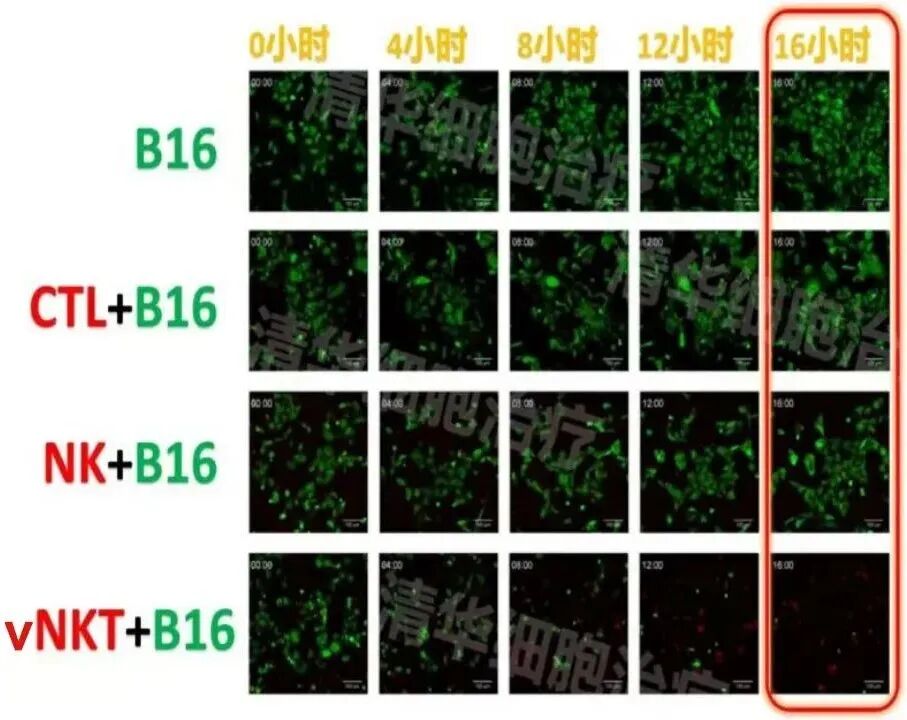
Experimental conditions: In the presence of vNKT cells, after 16 hours, nearly all B16 tumor cells were killed!


Ms. Wei began receiving vNKT cell therapy on July 5, 2023, with a treatment plan of one session per month. As of July 5, 2024, she has successfully completed 12 sessions.

     
Currently, follow-up visits indicate stable disease without recurrence or metastasis. Ms. Wei is in good spirits, with good appetite and sleep, and her quality of life has significantly improved. Imaging results have also gradually shown positive changes, from initially increased metabolic activity in bone metastases to later reduced density, and the latest scan results show that although there are still some areas of increased metabolic activity, the overall level of bone metabolism has not significantly worsened. This is undoubtedly the best commentary on the treatment efficacy.      


02            


Imaging changes 

Imaging  changes

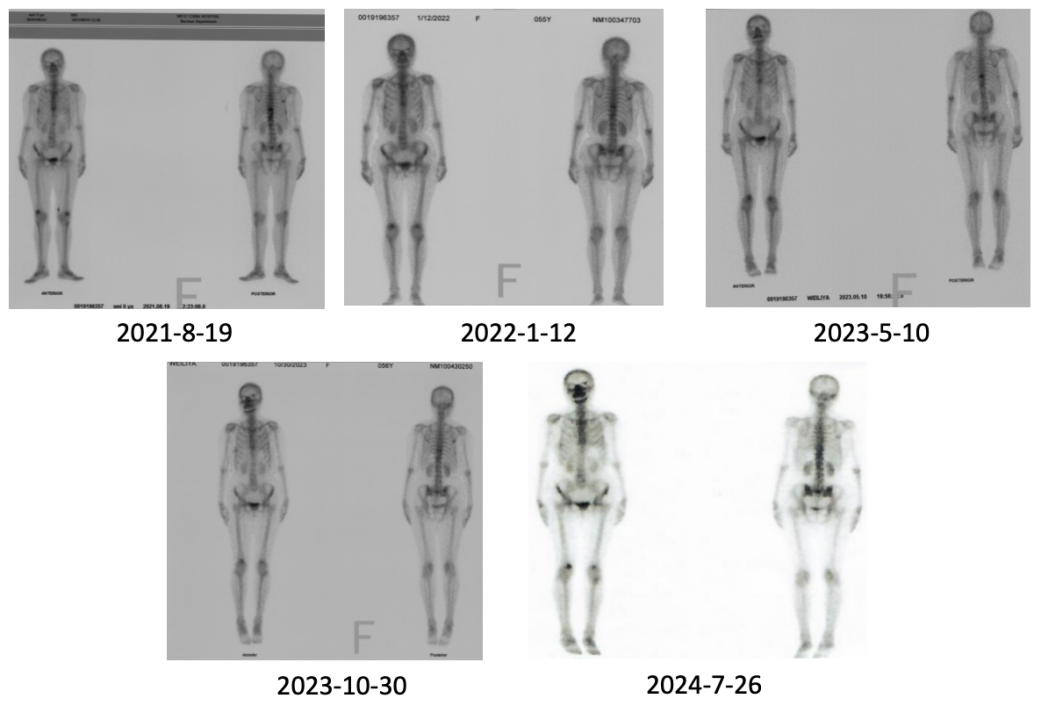
Bone scan:

     
August 19, 2021: Metabolic hyperactivity in the right 6th costovertebral segment and T9 vertebral body, suggesting tumor bone metastasis; Metabolic hyperactivity in T10-T12 vertebral bodies, bone metastasis cannot be excluded.      


January 12, 2022: Spotty and patchy increased radioactive concentration shadows were observed in the T9-T12 vertebral bodies.      


May 10, 2023: Increased bone metabolism in the thoracolumbar vertebral bodies, possible tumor metastasis. Compared to the bone imaging on January 12, 2022, the degree of bone metabolism in the T9 vertebral body has slightly increased. October 30, 2023: Increased bone metabolism in the T9 vertebral body, with reduced density.      


July 26, 2024: Increased bone metabolism in some thoracolumbar and sacral vertebrae, as well as beneath the right scapula, is considered to be a post-treatment change due to tumor bone metastasis. There is no significant change in bone metabolism compared to previous levels. Increased bone metabolism in the right sixth posterior rib near the axillary segment tends to be a post-treatment change.      


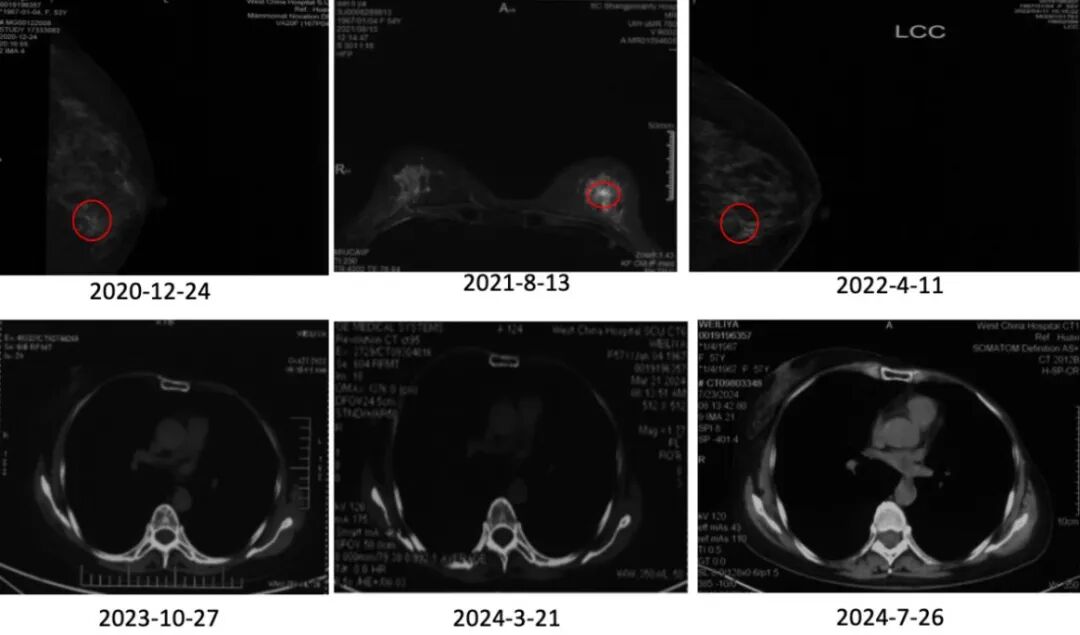
Chest CT:


Imaging examinations conducted on December 24, 2020, August 13, 2022, and April 11, 2022, all revealed a solid mass at 10 o'clock position in the upper outer quadrant of the left breast.


Follow-up lung CT scans in October 2023 and July 2024 revealed postoperative changes in the left breast, with no signs of recurrence in the surgical area.


04            


Conclusion and Review< H331>

Conclusion and Commentary            
Breast cancer bone metastasis ≠ hopeless
According to statistical data from the American Cancer Society (ACS), the 5-year survival rate for breast cancer patients is 91%, and the 10-year survival rate is 84% [2]. However, the survival period for breast cancer patients with bone metastasis is significantly shortened. For breast cancer patients with only bone metastasis, the 3-year survival rate is 50.5%, and the median survival period is 36 months [3].      

     
Ms. Wei has been living a stable life for 3 years since undergoing vNKT cell therapy, achieving ideal therapeutic effects. Her story serves as a morale booster for all breast cancer patients. In this process, vNKT cell immunotherapy has played an irreplaceable role in reducing the risk of recurrence and metastasis, providing patients with the possibility of achieving long-term tumor stability or even cure.      

     
Although bone metastasis indicates that breast cancer has progressed to an advanced stage, it does not necessarily mean the end of life. Compared to metastases to other sites such as the lungs, brain, and liver, the prognosis for bone metastasis is relatively favorable. In fact, some individuals can still embark on a new journey in life even with bone metastasis lesions. The key lies in maintaining vigilance, seeking medical help in a timely manner, and undergoing scientific treatment.      


Warm Interaction


Lastly, we also welcome all cancer patients to share their symptoms of bone metastasis, treatment experiences, and let's join hands to move forward on the road of anti-cancer together.



Lian
Department
Me     
       

Scan QR code

Communicate with Professor Zhang Minghui's team


References:

[1] Anwar SL, Avanti WS, Dwianingsih EK, et al. Risk factors, patterns, and distribution of bone metastases and skeletal-related events in high-risk breast cancer patients[J]. Asian Pac J Cancer Prev, 2022, 23(12): 4109-4117.

[2] DeSantis CE, Ma J, Gaudet MM, et al. Breast cancer statistics, 2019[J]. CA Cancer J Clin, 2019, 69: 438-451

[3] Wang R, Zhu Y, Liu X, et al. The clinicopathological features and survival outcomes of patients with different metastatic sites in stage IV breast cancer[J]. BMC Cancer, 2019, 19: 1091.



Zhang Minghui

Founder of Lehe New Medicine


Professor Zhang Minghui, who holds a PhD in Immunology from Tsinghua University School of Medicine, has led a research team for over 20 years since the discovery of vNKT cells in 2002. They have accumulated treatment experience in over 700 cases of solid tumors, covering almost all common solid tumors. The research results fully demonstrate the great value of vNKT cells in the treatment of solid tumors.


It is suitable for postoperative patients with high pathological malignancy or a risk of recurrence; patients whose tumors have been basically controlled but not cured through conventional treatments such as chemotherapy, radiotherapy, and targeted therapy; patients with persistent high carcinogenic factors; and patients intolerant to radiotherapy and chemotherapy. If these patients do not receive effective follow-up treatment after traditional anti-tumor therapy, recurrence, metastasis, or reoccurrence of tumors will be highly probable. In this case, vNKT cell therapy is an ideal follow-up treatment method, which can significantly improve the prognosis of patients.


Written by: Yizhituan      
Reviewed by: Qiao Jiacheng, Wang Ying, Gao Chen
Edited/typeset by Zhang Jiao


Click on the image to view past exciting content


图片


图片


What the fairies are watching
Click on the top right corner of the homepage · · · Set as Starred