About Lehe
乐于心,和与众,与己乐,与人和; 心宽念纯,百病无生。


乐于心,和与众,与己乐,与人和; 心宽念纯,百病无生。

▲Click the blue words to follow us

Breast cancer is the most common malignant tumor among women globally. According to the 2020 Global Cancer Statistics Report, breast cancer has surpassed lung cancer to become the most common malignant tumor in women, ranking first in both incidence and mortality. In 2020, an estimated 2.2614 million new cases of breast cancer occurred among women worldwide, accounting for 25.84% of all new cases of female malignant tumors; there were 685,000 deaths, accounting for 15.56% of all female malignant tumor deaths. [1]
Breast cancer generally has no precursors, and early symptoms are not obvious. Common early symptoms include breast lumps, abnormal breast skin, and nipple discharge. It is precisely these painless symptoms that make many women not take breast changes seriously. It has become commonplace to have a few nodules during annual breast examinations. If you can eat, drink, and sleep normally, who would think you could get cancer?
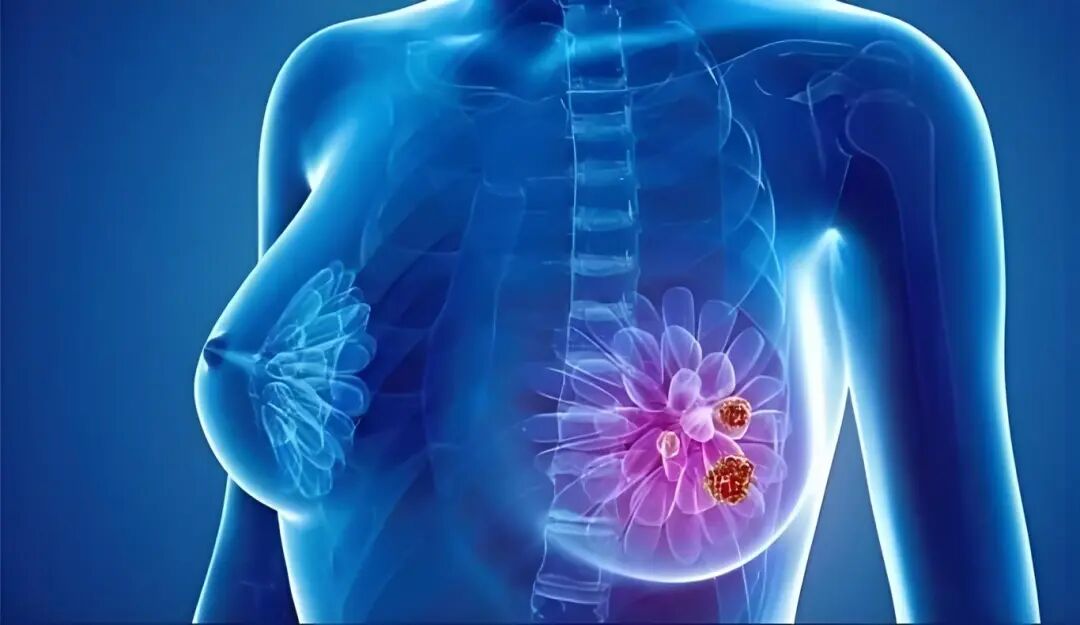
Therefore, breast self-examination is still a very practical method that women can complete on their own. Learning some self-examination methods can help detect breast diseases early and gain valuable time for treatment. (Click to view: 6-Step Breast Self-Examination Method, Keeping 90% of People Away from Breast Cancer)
Ms. Zhang is very grateful for discovering the problem early during breast self-examination.
Disease Overview
In September 2016, Ms. Zhang underwent a mammography examination due to a lump in her left breast, which revealed a mass shadow with calcification in the outer quadrant of the left breast, considered as BI-RADS category 4a.
Magnetic resonance imaging (MRI) revealed an irregular ring-shaped enhancement lesion in the left outer lower quadrant of the breast, with unclear boundaries and a size of approximately 1.1*1.1 cm. Patchy, nodular, and cord-like enhancement lesions were visible around the lesion, classified as BI-RADS 4a.
Tips
Breast BI-RADS Classification
Breast BI-RADS classification is a widely recognized grading system for breast diseases in ultrasound, radiology, and clinical practice. During color Doppler ultrasound (CDUS) examination, breast nodules can be classified into 1-6 categories. Category 1-3 breast nodulesare mostly common benign diseases that do not cause serious complications. Therefore, patients can undergo regular CDUS follow-ups and do not require excessive treatment. For category 5 breast nodules, there is a high risk of being malignant as indicated by , and category 6 can be essentially diagnosed as breast cancer . It is recommended that patients undergo timely surgical resection of the diseased tissue. For category 4 nodules, the nature is generally difficult to determine, but there is also a high risk of malignancy . Typically, BI-RADS category 4a is an indication for surgical treatment.
After discovering the abnormal space-occupying lesion, Ms. Zhang underwent "left mastectomy + left axillary sentinel lymph node biopsy" in September 2016. Pathology indicated multiple pieces of tissue (left breast) submitted for examination, measuring 2.5*2.5*0.4cm, with high-grade intraductal carcinoma observed under the microscope. ER (80%+), PR (-), AR (70%+), P53 (-), cerbB-2 (1+), E-cad (+), CK5/6 (+), SMA (+), P63 (+), Calponin (+), Ki-67 (10%+). Post-surgery, radiotherapy was administered, and long-term oral administration of toremifene was continued.
In August 2019, a PET-CT scan revealed increased glucose metabolism and bone destruction in both sacrum and ilium, suggesting breast cancer bone metastasis. After the discovery of bone metastasis, Ms. Zhang underwent bone metastasis lesion TOMO radiotherapy, with a single dose of 2gy and a total of 25 sessions for 50gy.
Ms. Zhang's initial postoperative TNM staging was T1N0M0, stage I. Although the staging was early, recurrence and metastasis occurred shortly thereafter, highlighting the importance of postoperative rehabilitation and conditioning as a crucial step!
Terminating Recurrence and Metastasis: Postoperative Rehabilitation and Conditioning Are Important
Video interpretation by Professor Zhang Minghui, an immunology expert from Tsinghua University
Once a person is diagnosed with a tumor, it indicates that his/her immune system may have loopholes and insufficient strength in fighting tumor cells. Moreover, it is often clinically observed that a considerable number of tumor patients suffer from multiple tumors simultaneously or successively, further indicating the weakness of their immune system.
Seizing the Opportunity to Intervene Early with vNKT Cell Therapy
Recognizing the importance of postoperative rehabilitation and conditioning, Ms. Zhang promptly contacted Professor Zhang Minghui's team at Lehexin Hospital to discuss vNKT cell therapy.
Tips
vNKT Cell Therapy
The vNKT immune cell subpopulation discovered by Professor Zhang Minghui's team at Tsinghua Universitypossesses both the non-specific recognition function of NK cells and the specific recognition function of CD8+T cells, so the dual anti-tumor effect of vNKT cells can rapidly kill tumor cells. It not only directly kills cancer cells but also kills and inhibits myeloid-derived suppressor cells (MDSCs, a heterogeneous group of cells derived from the bone marrow, which have the ability to significantly suppress immune cell responses and negatively regulate immune responses.), regulates the microenvironment within cancer tissues, providing new hope for the treatment of solid tumors. Meanwhile, vNKT cells are obtained by collecting immune cells from healthy individuals, culturing and expanding them, and then infusing them back into patients, making it easier to implement the treatment.
After comprehensively understanding Ms. Zhang's condition, the Lehexin Medical team provided a second diagnosis and treatment suggestion:
1. Ms. Zhang was diagnosed with breast cancer in 2016 and underwent surgical treatment. The early detection was a favorable factor.
2. Ms. Zhang's ER test was positive, and she received long-term oral endocrine therapy with toremifene. However, bone metastasis still occurred in 2019, indicating a high malignancy of the cancer cells.
3. After discovering the bone metastasis, Ms. Zhang promptly underwent TOMO radiotherapy, which was highly advisable. It reduced the tumor burden to some extent, but there was still a risk of progression. It is recommended to undergo vNKT cell therapy to enhance her body's immunity and control the tumor's development.
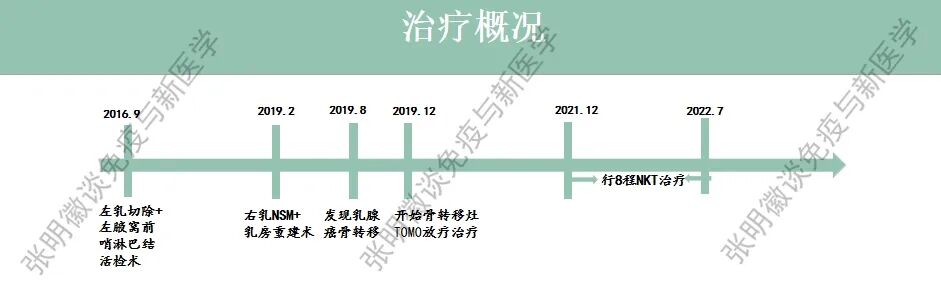
According to the second diagnosis and treatment recommendation, Ms. Zhang completed 8 courses of treatment from December 2021 to July 2022. The Lehe New Medicine team conducted long-term follow-up until July 2024, when no clear signs of tumor recurrence were observed during a reexamination, indicating overall stable disease.
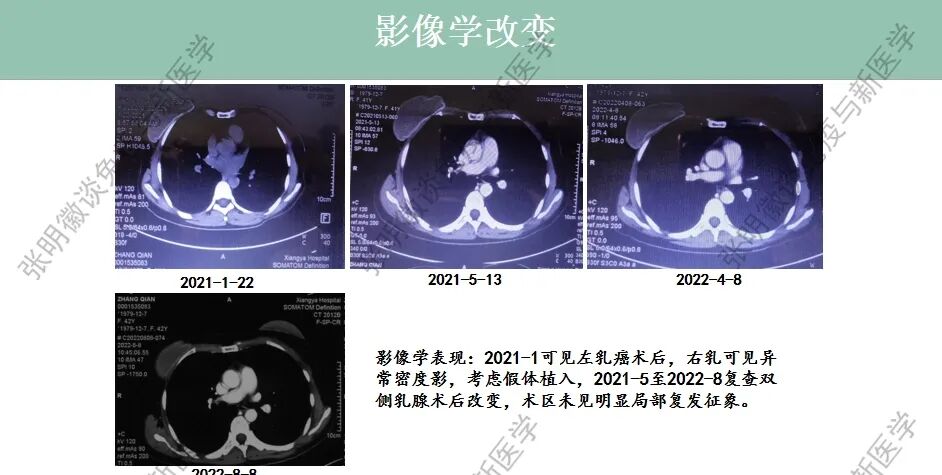
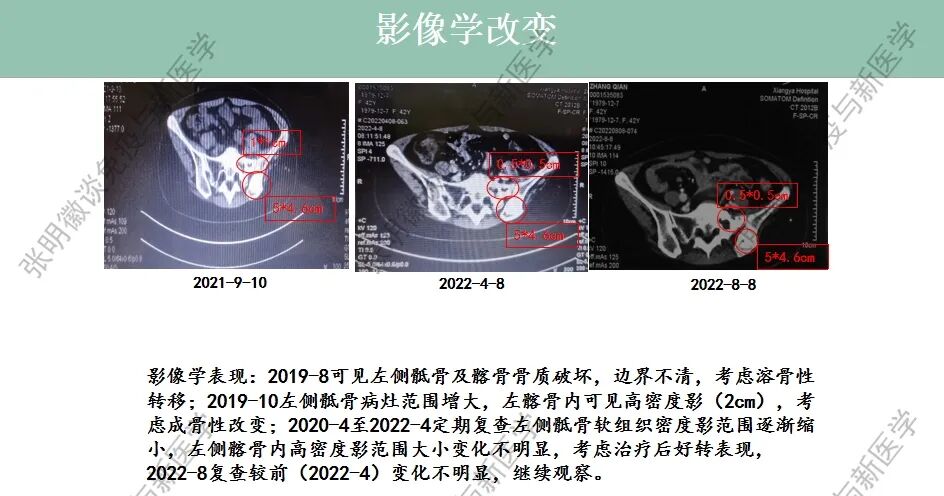
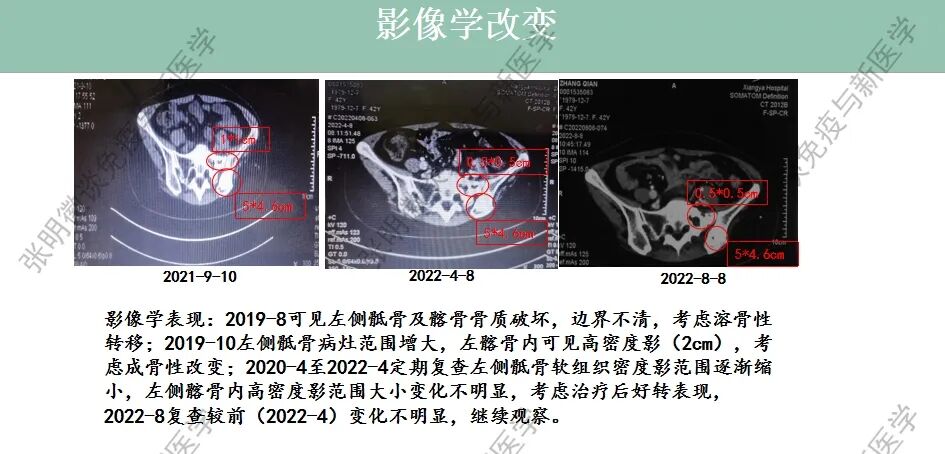
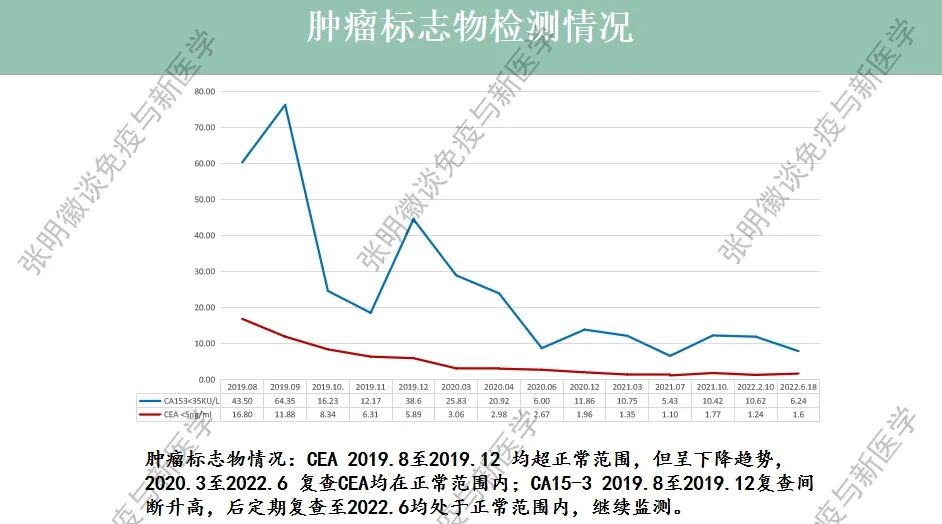
Ms. Zhang reported feeling more energetic than before, with an improved quality of life. She experienced fewer colds and fever in spring and winter, and her overall quality of life was excellent.
Summary
In cancer treatment, strategy must come first. Cancer is a highly complex disease, and its treatment methods are equally intricate. Effective strategic planning and the judicious application of various methods are crucial in treating cancer. Ms. Zhang has mastered this principle. Initially, Ms. Zhang underwent radical surgery to remove the primary lesion, followed by aggressive treatment for metastatic lesions using chemotherapy and radiotherapy. There were no significant severe complications or contraindications, and she actively sought rehabilitation methods for conditioning. By undergoing vNKT cell therapy, she was able to effectively control tumor recurrence after the occurrence of bone metastasis, thereby enhancing her quality of life.
Reference:

Contact Us
Scan QR Code
to communicate with Professor Zhang Minghui's team
Click on the image to view past exciting content
Contributed by: Liu Fengmei
Reviewed by: Qiao Jiacheng, Wang Ying, Gao Chen
Edited/typeset by: Liu Fengmei

Address: Room 1101 (Unit 101), 11th Floor, Building 1, No. 7 Courtyard, Kexueyuan Road, Life Science Park, Changping District, Beijing
Phone:010-8265 9866
Email:lehemedneo@hotmail.com