Contact Us Careers
Breast Cancer

Invasive breast cancer, how to get through the recurrence/metastasis crisis?

时间:2026-04-16 人气:

In September 2019, Ms. Yu underwent left breast mass biopsy due to a cystic mass found in her left breast. The pathological diagnosis was adenocarcinoma. On October 9, 2019, she underwent breast-conserving radical mastectomy and sentinel axillary lymph node biopsy. Postoperative pathology: Invasive breast cancer with moderate differentiation in the left breast mass. Accompanied by high-grade intraductal carcinoma, with a maximum diameter of approximately 1.1 cm, locally accompanied by suspicious intravascular cancer thrombus, and no clear nerve invasion. Pathological TNM staging: pT1cN2a. Immunohistochemical results: CD31 (indicating intravascular cancer thrombus), d2-40 (indicating intralymphatic cancer thrombus), P63 (indicating loss of myoepithelium), Calponin (indicating loss of myoepithelium), ER (approximately 90%+, staining intensity: moderate-strong), PR (approximately 90%+, staining intensity: strong), AR (approximately 90%+, staining intensity: moderate-strong), CerbB-2 (3+), Ki67 (20%+), P53 (indicating diffuse strong expression in tumor cell nuclei, considered to be of missense mutation type), E-cadherin (+++), EGFR (-), CK34EB12 (+++), CK5 (-). Axillary lymph node biopsy showed metastatic cancer: 4/12 lymph nodes, and sentinel lymph node biopsy showed metastatic cancer in 2/4 lymph nodes. Margins were negative.
On October 17, 2019, chemotherapy was administered: doxorubicin + cyclophosphamide for 4 cycles + docetaxel for 4 cycles (a total of 8 treatments until March 11, 2020). From January 5, 2020, to December 17, 2020, dual-target therapy was administered (a total of 18 treatments).
From March 23, 2020, to May 4, 2020, radiotherapy was administered (a total of 30 treatments). Currently, she is undergoing endocrine therapy with oral exemestane.
 
Immunohistochemical indicators of breast cancer  

Estrogen receptor (ER)ER exists in normal breast epithelial cells. When cells undergo carcinogenesis, ER may be partially or completely absent. However, in breast cancer patients, 70%-75% of ER tests positive, and these patients require endocrine therapy.

Progesterone receptor (PR)PR exists in normal breast epithelial cells. PR is highly expressed (>50%) in ER-positive breast cancer patients, but rarely expressed in ER-negative breast cancer patients. ER and PR are important prognostic indicators in breast cancer. The higher their expression levels, the better the effect of endocrine therapy and the better the prognosis.

Androgen receptor (AR)AR belongs to the steroid hormone nuclear receptor family. In ER-positive patients, about 60%-90% are AR-positive. Studies show that breast cancer patients with positive AR have a better prognosis than those with negative AR.

Proliferation-associated antigen (Ki67)Ki67 is mainly used to reflect cell proliferation, and is associated with tumor differentiation, recurrence, and metastasis. Ki67 overexpression indicates rapid tumor proliferation, rapid disease progression, high recurrence risk, and poor prognosis.

E-cadherin, also known as epithelial cadherin, is a calcium-dependent cell adhesion molecule. The higher the expression level of E-cadherin in patients with invasive breast cancer, the shorter their survival rate.

Ms. Yu underwent radical surgery to remove the tumor burden and subsequently received chemotherapy and radiotherapy. To prevent tumor recurrence, after extensive research, Ms. Yu sought the help of Professor Zhang Minghui's vNKT treatment team at Tsinghua University School of Medicine. After carefully reviewing the demonstrated cases of vNKT cell therapy, she particularly hoped to try it to delay tumor progression.
After carefully reviewing Ms. Yu's medical records, Professor Zhang Minghui made the following analysis and judgment:
1. Ms. Yu underwent breast-conserving radical mastectomy after being diagnosed with breast cancer, and subsequently received 8 rounds of chemotherapy and 30 rounds of radiotherapy.  
 

2. Postoperative pathology of the patient indicated the presence of high-grade intraductal carcinoma, with suspected intravascular thrombus in some areas, and axillary lymph node metastasis.

3. Immunohistochemical results showed Ki67 (20%+), E-cadherin (+++), both indicating a poor prognosis for the tumor.

4. vNKT therapy utilizes the patient's own immune cells to eliminate residual "invisible tumor cells," thereby reducing the risk of metastasis and recurrence. Additionally, it has minimal side effects and is highly compatible and friendly to patients.
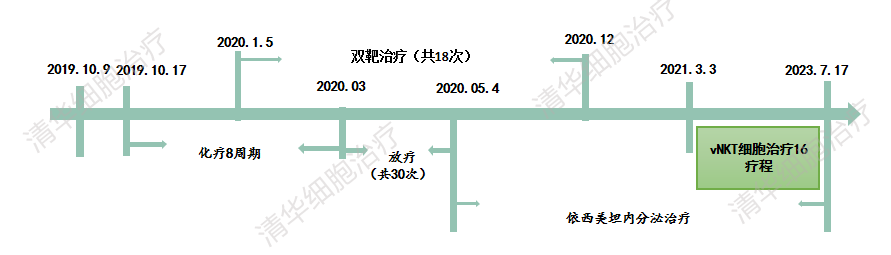

 

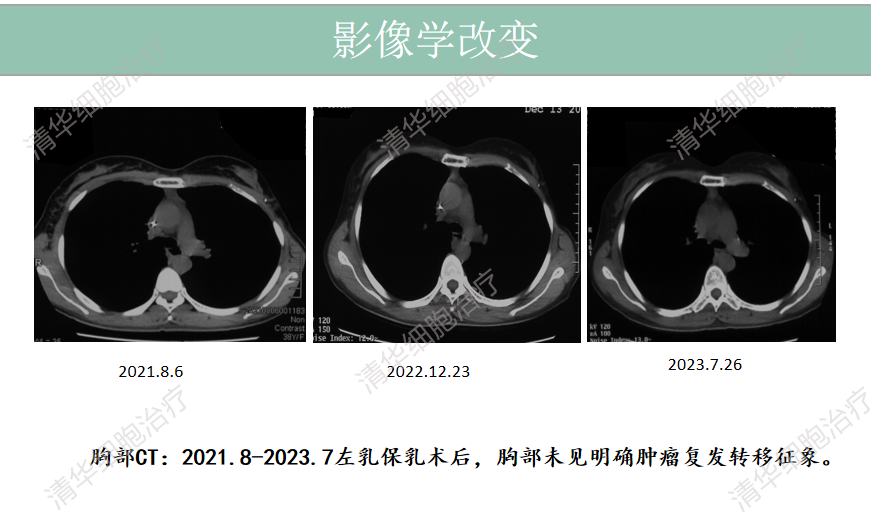
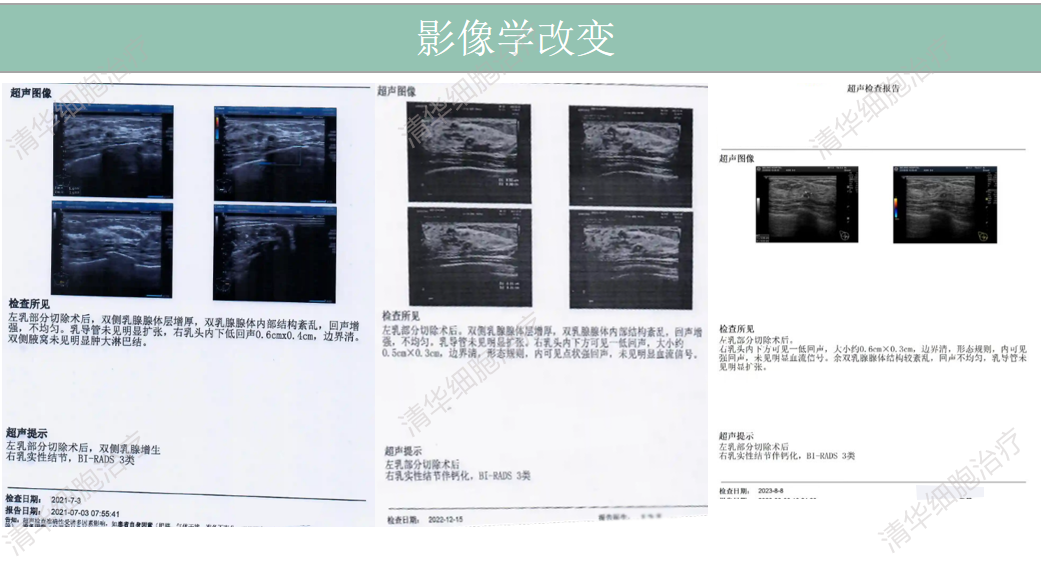
Ms. Yu started receiving vNKT cell therapy in March 2021, with a regimen of one course per two months. By July 17, 2023, a total of 16 courses had been completed.

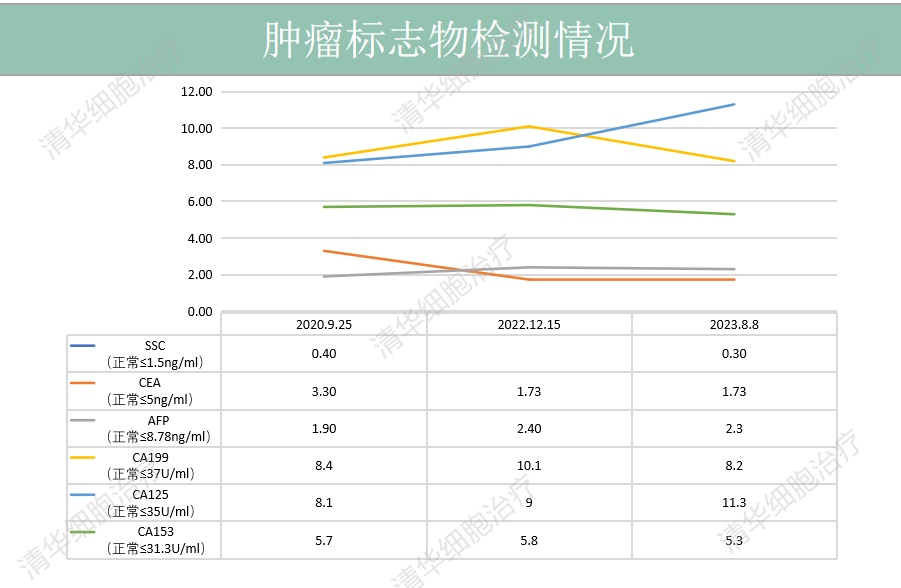
SSC: Normal in both the September 2020 and August 2023 reexaminations;
CEA, AFP, CA199, CA125, CA153: Normal re examination from September 2020 to August 2023, regular re examination.

With the development of society, people's living standards are getting higher and higher, and the incidence rate of female breast cancer is also rising. In recent years, the incidence rate of breast cancer in China is also rising, and the age of onset is also declining. According to the research data, breast cancer has the highest incidence rate among Chinese women, with an incidence rate of about 0.3% to 1%. At the same time, from a global perspective, there are about 1.6 million new breast cancer patients every year, of which about 500000 people die from breast cancer. Studies have found that the risk of postmenopausal breast cancer is three times higher than that before the age of 30. It can be seen that breast cancer is so harmful to women's health and life that it has attracted extensive attention from scholars all over the world< H247>[1]
Studies have shown that histological grade ≥ Grade II, positive lymph node metastasis, TNM stage II, vascular invasion, tumor diameter ≥ 2.0 cm, irregular focus shape are independent risk factors for recurrence and metastasis of invasive breast cancer patients after breast conserving surgery[2].
Ms. Yu's postoperative pathology suggests vascular cancer thrombus invasion and multiple lymph node metastases, which are high-risk factors for recurrence and metastasis. Cancer cells can settle throughout the body through blood flow to form tiny lesions, which are latent in the body. No matter how extensive the resection of the primary cancer is, it does not affect the sustained growth of metastatic lesions. VNKT therapy utilizes powerful immune cells to kill tumor cells that may remain undetected in the body, effectively slowing down the time for recurrence and metastasis.
Ms. Yu achieved the expected results after using vNKT cell therapy. She feels more energetic in daily life, work, and work than before, and her hair volume has increased.

References:

[1] Song Jie, Sun Qiang, the significance of developing screening guidelines for Chinese women breast cancer [J]. China Research Hospital, 2022,9 (2): 23-27.
[2] Fan Xingchao, Zou Lijun. The relationship and predictive value of the nature of the resection margin in breast conserving surgery for invasive breast cancer and preoperative magnetic resonance imaging characteristics [J]. Progress in Modern General Surgery in China, 2023, 26(08):637-640.     

Click on the image

to view