Contact Us Careers
Intestine Cancer

Liver metastasis of rectal cancer, this is her 8th year of fighting cancer

时间:2026-04-16 人气:

Colorectal cancer is one of the major public health issues worldwide [1]. According to reports, in 2020, there were 1,931,600 new cases and 935,200 deaths of colorectal cancer globally; it ranked third and second in the list of malignant tumors, respectively [2]. In China, there are more than 170,000 new cases and nearly 100,000 deaths annually, with a liver metastasis rate of over 25% [3-4]. According to statistics, the number of deaths from liver metastasis of colorectal cancer accounts for about 10% of the total cancer deaths globally [5]. Previous colorectal cancer registration data shows that the 5-year net survival rate for patients with liver metastasis of colorectal cancer ranges from 28.3% to 31.1%

. After undergoing surgery and chemoradiotherapy, patients' immune function is suppressed, and the tumor enters a dormant state. When it accumulates to a certain amount, it can cause recurrence and metastasis. Improving the survival rate of patients with liver metastasis of colorectal cancer is a challenge we need to overcome.


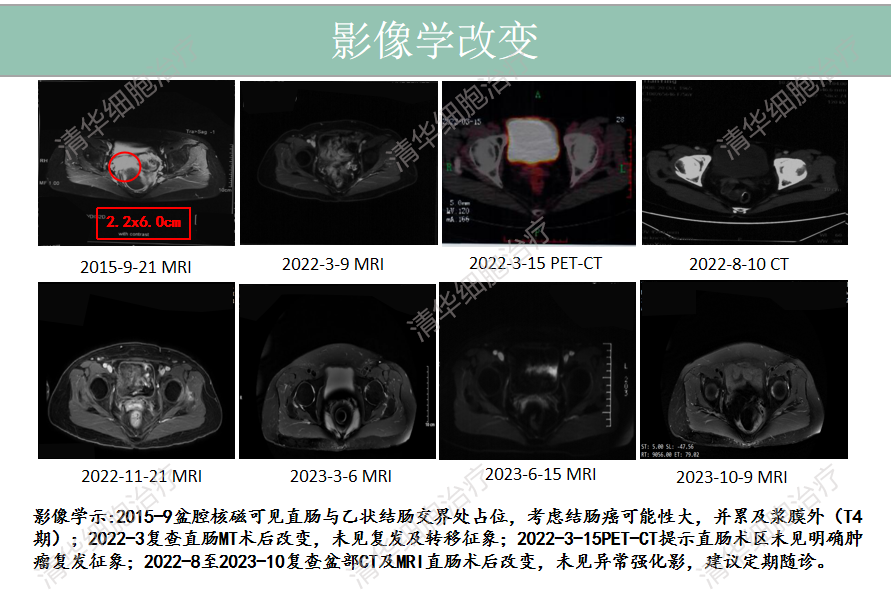
Ms. Tian underwent colonoscopy on September 19, 2015, due to recurrent hematochezia for one year and increased bowel movements. The pathological biopsy taken during the colonoscopy showed rectal adenocarcinoma located 10cm from the anal opening .
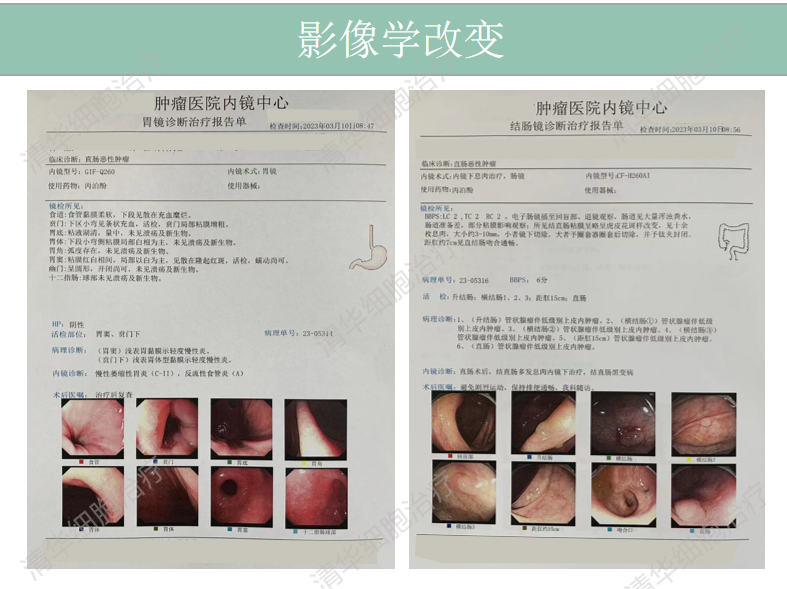
After discovering a tumor, Ms. Tian underwent radiotherapy and three rounds of chemotherapy (with the regimen of oxaliplatin, calcium folinate, and 5-fluorouracil) from September 30, 2015, to November 25, 2015. Following the completion of chemotherapy, she underwent laparoscopic-assisted anterior rectal resection. The postoperative pathology report on December 30, 2015, indicated that all specimens from the original lesion showed residual cancer tissue, with the deepest part located in the submuscular adipose tissue. The lymph node metastasis status was as follows: 3/10 in the perirectal area;no other lymph node metastasis was observed. From January 20 to May 20, 2016, she underwent a total of eight rounds of chemotherapy, and on June 30, 2016, she received capecitabine chemotherapy. From September 30 to November 25, 2016, she underwent a total of three rounds of chemotherapy. On October 28, 2016, a colonoscopy was performed to remove a polyp in the colon segment through electrosection and forceps removal.
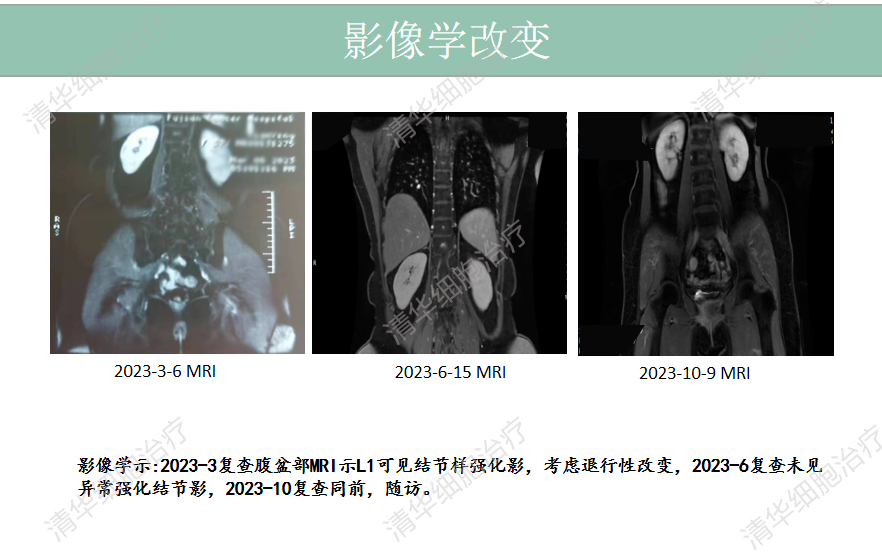
After multiple rounds of chemotherapy before and after surgery, Ms. Tian's condition remained stable until March 2022, when a CT scan revealed a mass beneath the diaphragmatic surface of the right liver, with the largest cross-sectional area measuring approximately 5.5cmx4.4cm. Considering metastatic tumor, a PET-CT scan later confirmed liver metastasis. Ms. Tian underwent another surgery, this time employing robot-assisted laparoscopic liver resection (segment VIII) to minimize trauma. The postoperative pathology report indicated adenocarcinoma infiltration in the liver tissue of segment VIII, which, combined with her medical history, hematoxylin and eosin (HE) morphology, and immunophenotype, was consistent with intestinal cancer metastasis.
From April 12 to May 9, 2022, she underwent a total of three rounds of chemotherapy, all with the regimen of irinotecan, calcium folinate, and 5-fluorouracil. From May 19 to June 8, 2022, she received fifteen rounds of radiotherapy targeting the liver. From June to August 2022, a total of five rounds of chemotherapy were administered, all using the same regimen consisting of irinotecan, calcium folinate, and 5-fluorouracil.
 
Neoadjuvant chemotherapy  

Neoadjuvant chemotherapy (NACT), also known as upfront chemotherapy, refers to chemotherapy administered before radical treatment (surgery, radiotherapy, etc.); whereas adjuvant chemotherapy refers to chemotherapy administered after radical treatment. Since the 1980s, NACT has been widely used as an important component of comprehensive cancer treatment for various early and advanced solid tumors.

The potential advantages of preoperative NACT include the following aspects:

(1) It can reduce the stage of locally advanced or advanced tumors, turning inoperable tumors into resectable ones and increasing the rate of complete resection.

(2) It can eliminate potential micrometastases and occult distant metastatic lesions in the blood.

(3) It can narrow the surgical scope, reduce the invasiveness of surgery, and increase the possibility of organ preservation.

(4) It can evaluate the sensitivity of chemotherapy drugs in patients' bodies, and pathological complete response can predict prognosis and guide subsequent treatment.

(5) It can reduce pathological risk factors for tumor recurrence, decrease patients' need for adjuvant radiotherapy or chemotherapy, and improve patients' quality of life due to better tolerance to chemotherapy before surgery.
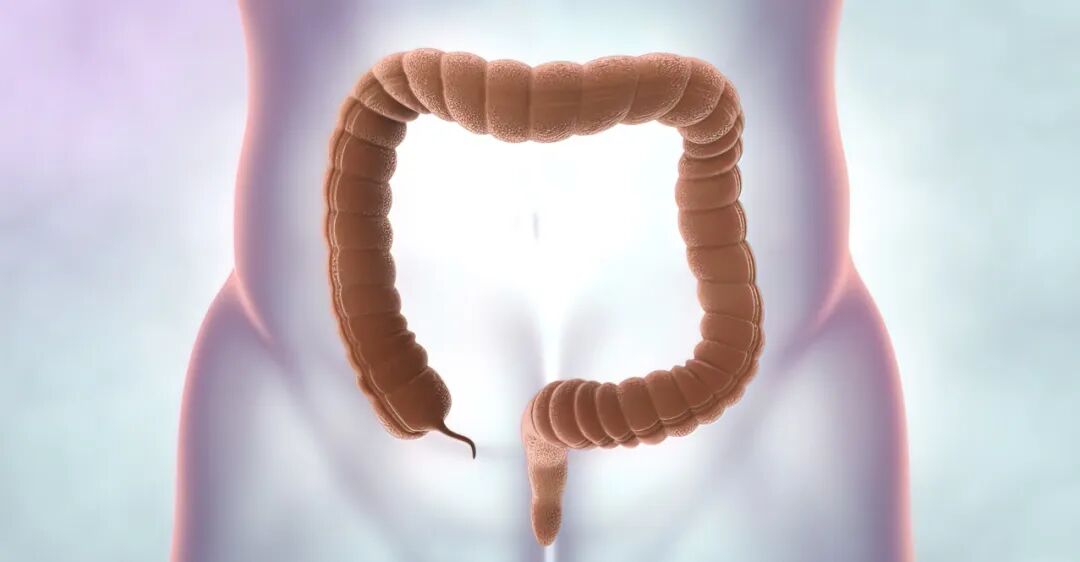
Despite undergoing multiple rounds of chemotherapy, Ms. Tian still experienced liver metastasis, causing her great concern. To prevent tumor recurrence, Ms. Tian sought help from Professor Zhang Minghui's vNKT treatment team at Tsinghua University School of Medicine after extensive research. After carefully reviewing the demonstration cases of vNKT cell therapy, she particularly desired to try this technique to slow down the progression of the tumor.
After evaluating Ms. Tian's medical records, Professor Zhang Minghui's medical team made the following analysis and judgment:
1. The patient was found to have a rectal tumor and completed multiple rounds of chemotherapy before and after surgery.

2. The patient's tumor has penetrated the muscular layer and infiltrated into the adipose tissue, with local lymph node metastasis. These are risk factors for future metastasis.

3. After discovering liver metastasis, the patient underwent surgical resection of the metastatic foci, but the tumor still poses a risk of recurrence.

4. vNKT therapy utilizes powerful immune cells to eliminate tumor cells that may remain undetected in the body, with essentially no side effects. Combined with vNKT cell therapy after surgical treatment, it can effectively reduce the incidence of tumor recurrence.
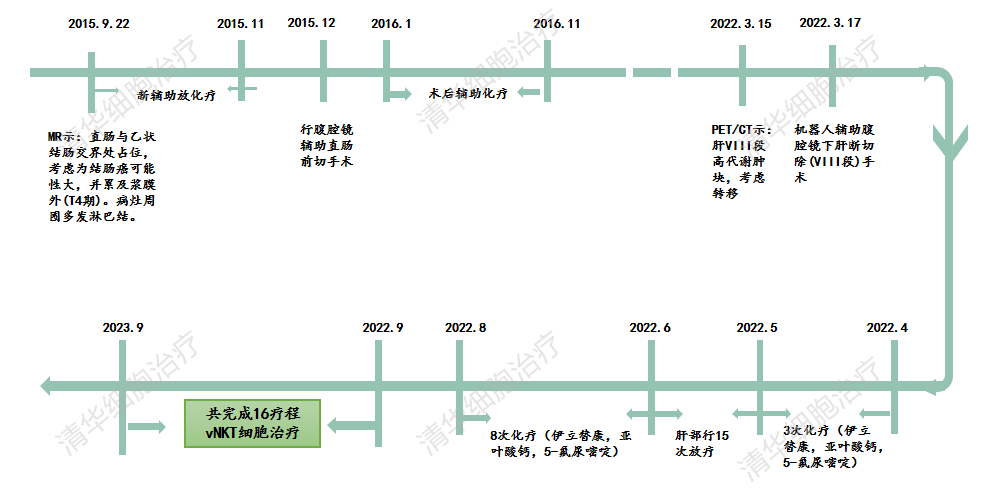

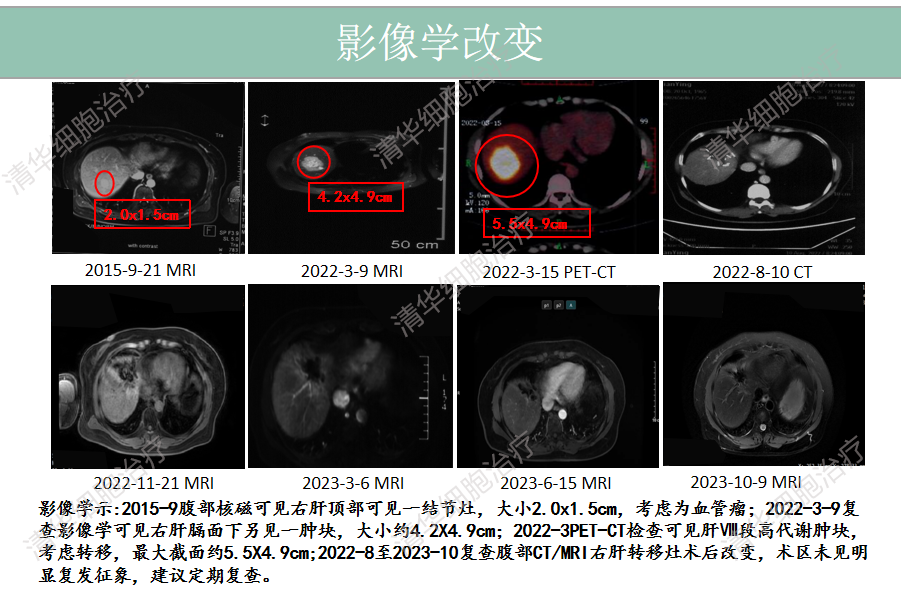
Ms. Tian began vNKT cell therapy on September 19, 2022, with a regimen of 2 courses per month (no reinfusion in January 2023, and one course in March). In May 2023, the regimen was adjusted to 1 course per month, and by September 19, 2023, a total of 16 courses had been completed.

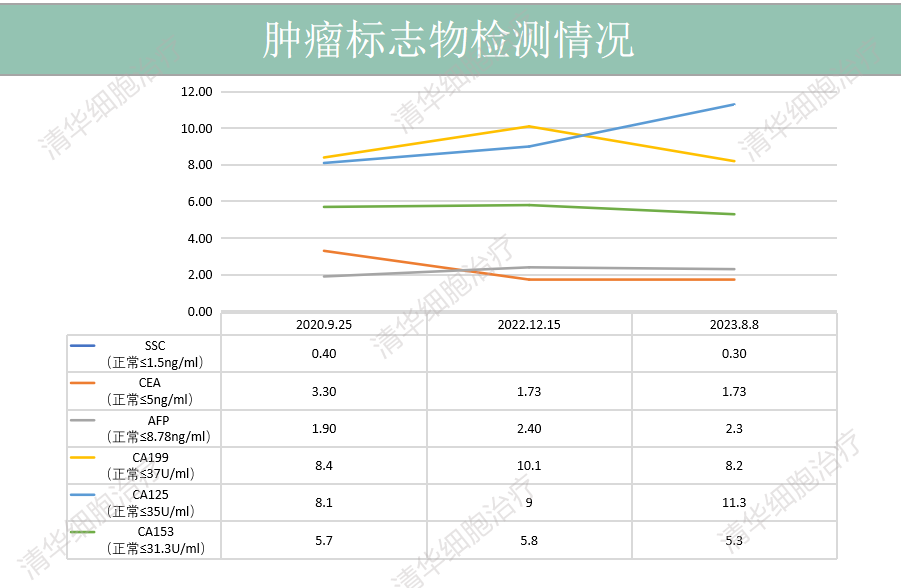
CEA: Recheck results from December 2015 to March 2022 were within the normal range. Recheck results in August and November 2022 exceeded the normal range but showed a decreasing trend. Recheck results in March 2023 returned to normal, but increased again in June 2023. Although recheck results in October 2023 were still higher than normal, they were lower than before.

After being diagnosed with cancer, Ms. Tian underwent neoadjuvant chemotherapy combined with surgical resection to maximize the removal of cancer cells. However, metastasis occurred in 2022, indicating the powerful resurgence of cancer cells. Ms. Tian has undergone two surgeries and dozens of chemotherapy sessions, leaving her body in a very weakened state. Even with robotic technology, it would be difficult for her to withstand a third surgery.
vNKT cell therapy not only eliminates residual tumor cells but also strengthens the immune system and repairs the damage caused by multiple chemotherapy sessions, most importantly, with almost no side effects. Ms. Tian achieved the expected results after undergoing vNKT cell therapy, with a quality of life score of 85 (previously 81). We look forward to bringing long-term stability to patients.

References:

[1] Torre LA, Siegel RL, Ward EM, et al. Global cancer incidence and mortality rates and trends: an updated update [J]. Cancer Epidemiol Biomarkers Prev, 2016, 25(1): 16-27.
[2] Bray F, Frey LJ, Soerjomartara I, et al. Global Cancer Statistics 2018: Estimates of Incidence and Mortality Worldwide for 36 Cancers in 185 Countries [J]. CA Cancer J Clin, 2018, 68(6): 394-424.
[3] Manolove J, Ciavarino S, Welti K. Opportunities and Challenges in Implementing and Evaluating School-Based Sex Education Programs [J]. J Adolesc Health, 2021, 68(4): 637-638.
[4] Wu Y, Yang S, Ma J, et al. Spatio-temporal Immunological Landscape of Colorectal Cancer Liver Metastasis at Single-Cell Level [J]. Cancer Discov, 2022, 12(1): 134-153.
[5] Biller LH, Schrag D. Diagnosis and Treatment of Metastatic Colorectal Cancer: A Review [J]. JAMA, 2021, 325(7): 669-685.

Click on the image

to view