About Lehe
乐于心,和与众,与己乐,与人和; 心宽念纯,百病无生。


乐于心,和与众,与己乐,与人和; 心宽念纯,百病无生。


If you cannot understand the subsequent professional description, you can finish reading this text in two minutes
Disease Overview
Knowledge
Video-assisted thoracoscopic surgery (VATS) is a newly developed minimally invasive diagnostic and therapeutic method in the field of thoracic surgery. It is favored by doctors and patients due to its advantages of minimal trauma, mild pain, rapid recovery, and minimal impact on cardiopulmonary function. Modern endoscopic surgery integrates electronic digital imaging technology and information technology with traditional surgical medicine, representing a novel surgical technique.
It is like a large camera, capable of inserting a cylindrical lens with a diameter of 1.0 cm into the chest cavity. Through a miniature imaging system, the adjacent tissues and morphological structures of human organs are transmitted to the monitor screen in images. Surgeons insert endoscopic instruments through button-sized incisions to dissect and separate tissues, completing the surgery.
The greatest advantage of the thoracoscopic system lies in its minimal trauma. Without the need for a chest retractor to rigidly open the intercostal space, the intercostal nerves are almost not stretched, and the intercostal muscles are not cut. Postoperative pain is significantly reduced compared to conventional thoracotomy. Furthermore, the integrity of the thorax is well preserved, and expectoration and deep breathing functions are almost unaffected. Early ambulation is achieved, significantly reducing the placement time of chest tubes and hospitalization duration. The incidence of postoperative complications such as atelectasis, pneumonia, and pleural effusion has also been significantly reduced.
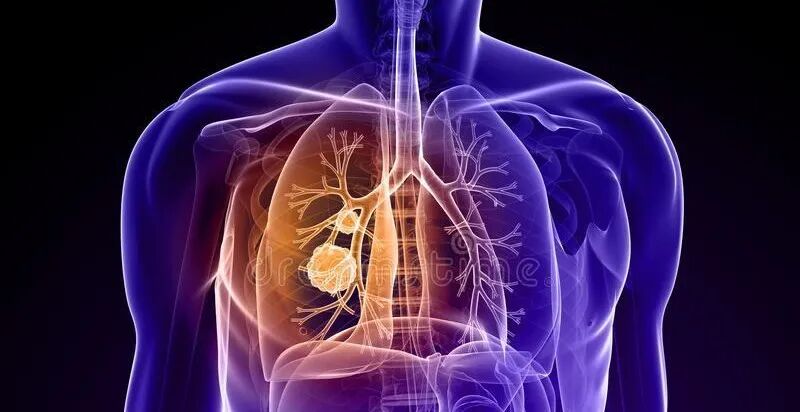
2. Although the patient has early-stage lung cancer, which is prone to pleural metastasis due to its close proximity to the lung membrane, they still fear postoperative recurrence. Postoperative chemotherapy for early-stage lung cancer does not meet the indications and can be harmful to the body.
3. NKT cell therapy utilizes powerful immune cells to eliminate tumor cells that may remain in the body, with essentially no side effects, providing a new option for preventing recurrence in patients who have undergone surgery for early-stage lung cancer.
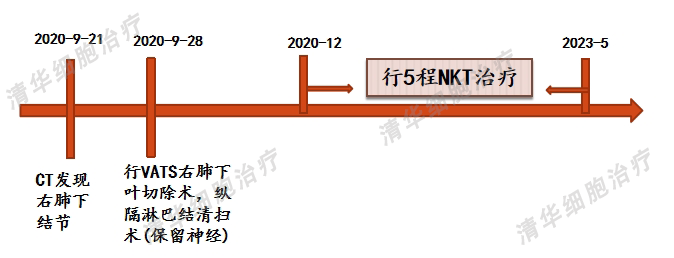
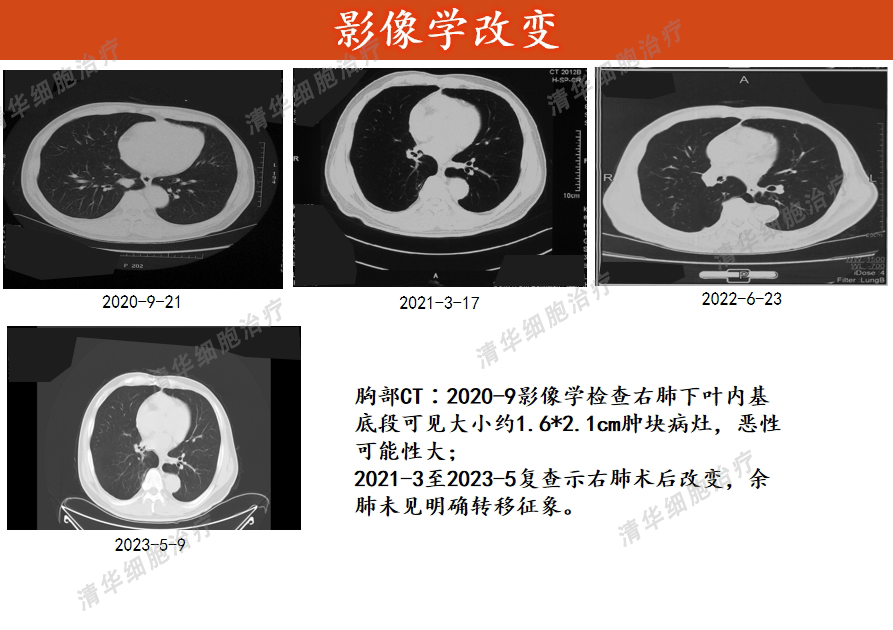
Image Aspects
Tumor markers
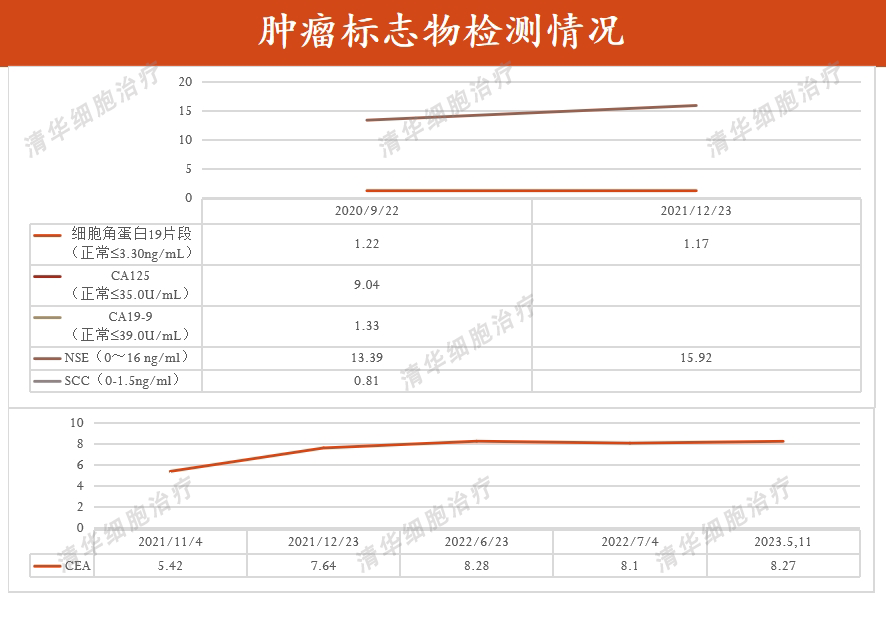
Tumor marker: CEA. From November 4, 2021, to May 11, 2023, the reexamination results were slightly higher than normal, fluctuating between 5.42 and 8.27. Pay attention to future reexaminations.
The levels of cytokeratin 19 fragment, CA125, CA199, NSE, and SCC were within the normal range on September 2020 and December 23, 2021, and no further reexaminations were conducted thereafter.
Conclusion and Comments
Reference:< H427>
【1】D.K. Que, T. Nguyen,PP01.80 Long term Results of VATS Lobectomy for Early staged Non Small Cell Lung Cancer,Journal of Thoracic Oncology,Volume 18, Issue 3, Supplement.
Click on the image
Address: Room 1101 (Unit 101), 11th Floor, Building 1, No. 7 Courtyard, Kexueyuan Road, Life Science Park, Changping District, Beijing
Phone:010-8265 9866
Email:lehemedneo@hotmail.com