Contact Us Careers
Lung Cancer

After two consecutive recurrences following lung cancer surgery, a new approach was adopted, which finally prevented the cancer cells from "returning"

时间:2026-04-27 人气:

If you cannot understand the subsequent professional description, you can finish reading this text in two minutes
Ms. Liu discovered a cloudy shadow in the upper lobe of her right lung during a physical examination in 2014, and the diagnosis was inclined to be organizing pneumonia. However, she did not pay much attention to it, and the pneumonia self-healed.
Since 2017, the CEA level gradually increased to 16.7ng/ml, but it still did not draw much attention. (Upon reviewing her medical history, it was found that the lesion in her right lung had already begun to deteriorate at this time.)
After a year and a half, during another physical examination in October 2018, the CEA level had reached 49ng/ml, and the CT scan revealed a space-occupying lesion in the right lung. She underwent a "right upper lobe resection + mediastinal lymph node dissection" one month later, and the postoperative pathology indicated moderately differentiated adenocarcinoma in the right upper lobe. Gene testing revealed a low-frequency mutation in EGFR, indicating poor response to targeted therapy. Therefore, adjuvant therapy with "bevacizumab + pemetrexed, nedaplatin" was administered for 6 cycles.
However, just five months later, in May 2019, Ms. Liu noticed enlargement of cervical lymph nodes. She began radiotherapy for the chest and bilateral cervical lymph nodes, with a total of 30 treatments.
A year later, enlargement of left axillary lymph nodes was observed, and a biopsy indicated tumor recurrence and metastasis. She underwent another 4 cycles of chemotherapy with "bevacizumab + pemetrexed + cisplatin". This was accompanied by radiotherapy for the left axillary lymph nodes.
Despite following the guidelines for surgery, radiotherapy, and chemotherapy, why is it still impossible to control tumor recurrence and metastasis?

This is a question that many cancer patients and their families are anxious about, and it is also a problem that many medical technologies cannot fully address. Recurrence/metastasis is like an inescapable curse that follows relentlessly.
Is there a treatment method to terminate the continuation of this nightmare?
After being recommended by a friend, Ms. Liu and her family learned about Professor Zhang Minghui's NKT technology from Tsinghua University School of Medicine, which has great effects on delaying recurrence and metastasis. At the same time, seeing the efficacy of many NKT treatment cases displayed online gave them great encouragement, and they particularly wanted to try it.
After reviewing Ms. Liu's case, Professor Zhang made the following analysis and judgment:
1. Ms. Liu discovered a cloudy shadow in her right lung in 2014, which was initially diagnosed as inflammation. However, repeated chronic inflammation is prone to malignant transformation. (Click to viewChronic inflammation is one of the important causes of cancer, but unfortunately, many people are unaware of this) When the CEA gradually increased after 3 years, it was a clear indication, but it was not taken seriously at the time.
2. Ms. Liu's postoperative staging was pT2N2M0, indicating lymph node metastasis and a risk of subsequent recurrence and metastasis. From subsequent medical history, Ms. Liu indeed experienced two episodes of lymph node metastasis.
3. Ms. Liu's most important treatment goal was to prevent a possible third recurrence/metastasis and maintain a stable state without "new conditions" for a long time. NKT treatment can precisely achieve this, and many cases have confirmed this point. (Click to view Breaking the norm, lung cancer has not recurred or metastasized five years after surgery, thanks to this method )
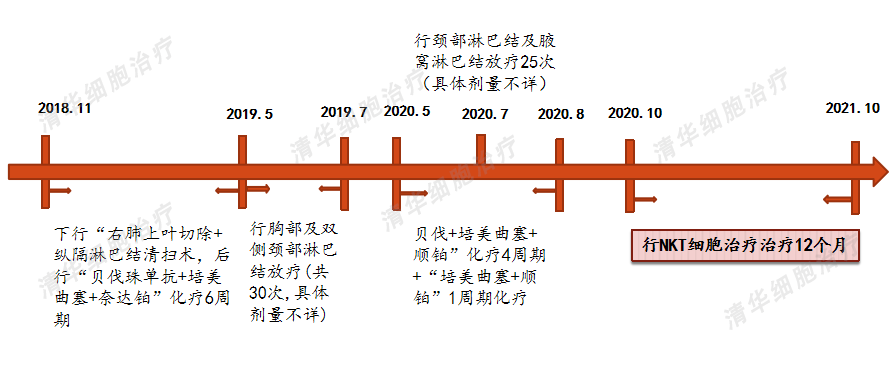
In October 2020, Ms. Liu began NKT cell therapy, with a regimen of one session per month, and by October 2021, she had completed a full year of treatment, with 12 sessions in total. During this period, multiple follow-up examinations showed normal indicators. Most of the side effects left over from chemotherapy had disappeared, and her mental and physical states were excellent.
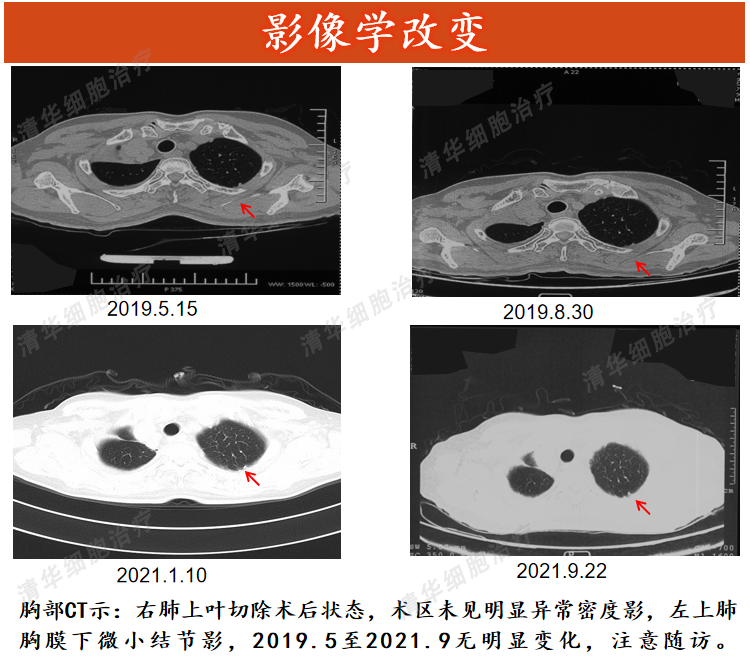
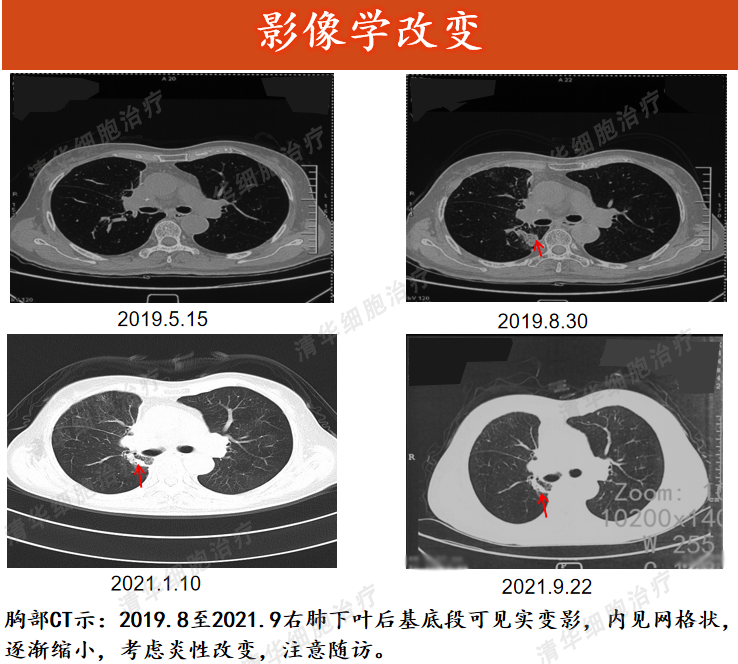
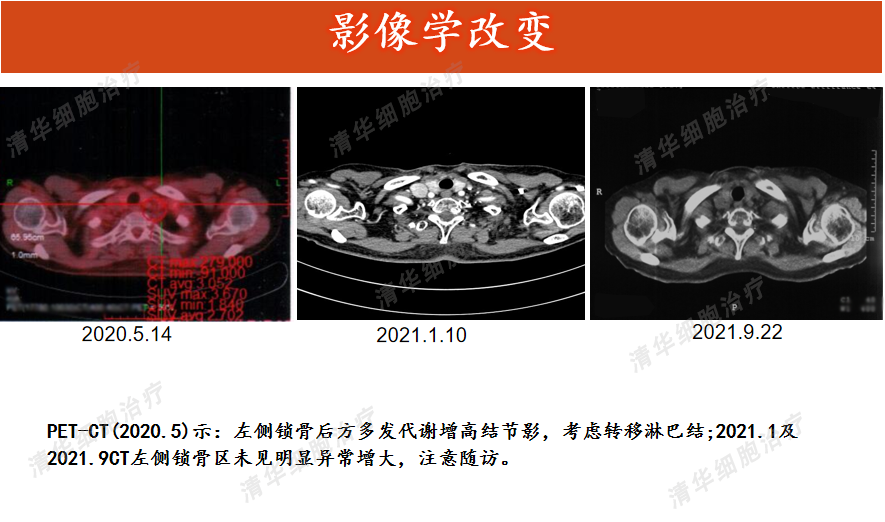
In terms of imaging
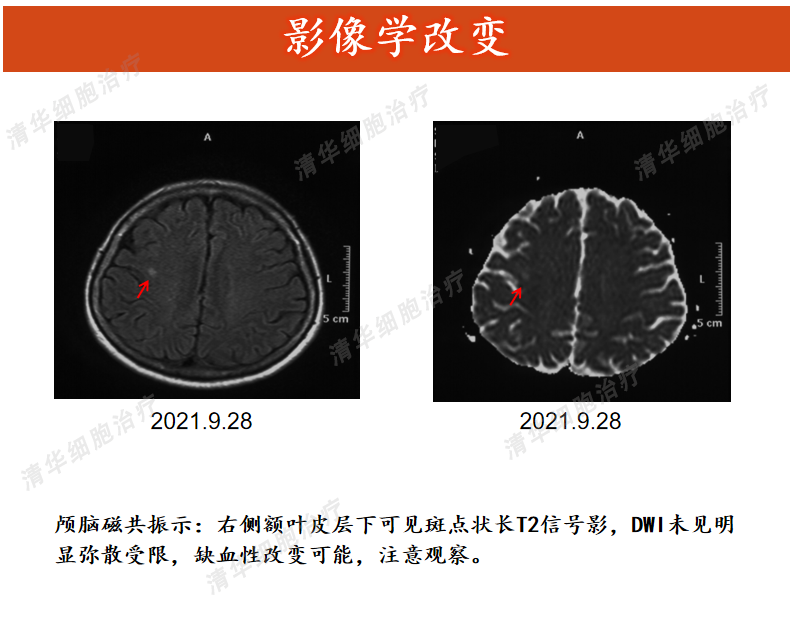
From January 2021 to September 2021, chest CT and ultrasound examinations showed no abnormal enlargement; brain MRI did not reveal significant signs of metastasis, with follow-up recommended. Overall, the imaging assessment was SD.
In terms of tumor markers and quality of life
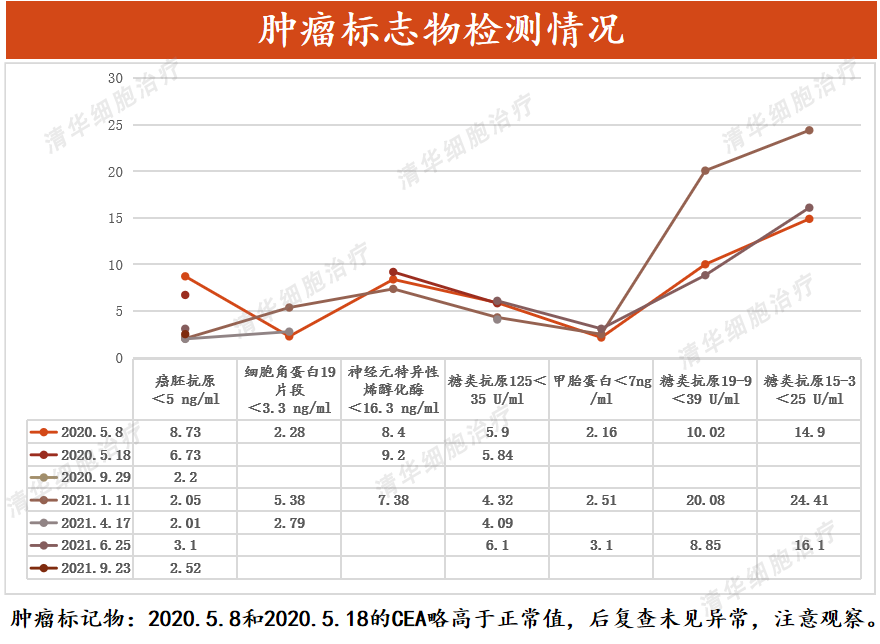
On May 8, 2020, and May 18, 2020, CEA levels were slightly higher than normal, but subsequent follow-up examinations showed no abnormalities, and they have remained stable.
Ms. Liu's quality of life has significantly improved, with a weight gain of 1~3kg, and excellent sleep and diet. Her mental state is also very good, having returned to her pre-illness state.
Conclusion
Ms. Liu's case serves as a good demonstration of the "stabilizing" effect of NKT cell therapy. Despite undergoing surgery, radiotherapy, and chemotherapy, the issues of recurrence/metastasis were not effectively resolved. As a result, Ms. Liu experienced her first distant lymph node metastasis five months after treatment, followed by a second metastasis.
NKT cell therapy, on the other hand, starts with the immune system, not only eliminating residual tumor cells but also systematically enhancing the patient's immune response level. From a macro perspective, it can be observed that on the one hand, tumor activity is suppressed, and on the other hand, the patient's overall mental and physical levels have been systematically improved.
Let's look forward to her treatment progress next year!
Popular science knowledge is provided for reference only. Individual patients should follow clinical medical advice.                    

NKT Classic Case Review

Click on the image

to view