About Lehe
乐于心,和与众,与己乐,与人和; 心宽念纯,百病无生。


乐于心,和与众,与己乐,与人和; 心宽念纯,百病无生。

▲Click the blue text to follow us
After cancer patients endure the arduous journey of surgery, chemotherapy, and radiotherapy, they often encounter a series of additional problems:
1
Persistent infections,
2
Decreased platelet and white blood cell counts, bone marrow suppression,
3
Vomiting, diarrhea, weight loss,
4
Increasing physical weakness and slow recovery,
5
The occurrence of cancer mainly depends on two key factors: gene mutation and immune evasion. In the complex immune system of the human body, there exists a delicate balance: the immune system can efficiently eliminate "foreign" components while avoiding mistakenly attacking "friendly" forces. However, this balance is sometimes exploited by "cunning" tumor cells, allowing them to escape the tight surveillance of the immune system, and cancer silently emerges.
Currently, traditional cancer treatments mainly include surgery, radiotherapy, and chemotherapy. Surgery, as a traumatic procedure, can weaken the immune system in the short term. While radiotherapy and chemotherapy eliminate cancer cells through physical and chemical means, they inevitably damage immune cells such as white blood cells, thereby affecting the normal function of the immune system and significantly reducing the body's defense capability.

If the immune system of a cancer patient collapses or fails to develop positively during the process of surgery, radiotherapy, and chemotherapy, the outcome of the entire treatment is often unsatisfactory. On the contrary, if the patient's immune system develops positively, the synergistic effect of surgery, radiotherapy, and chemotherapy can often achieve twice the therapeutic effect with half the effort.
Therefore, protecting and enhancing immunity is crucial in the process of cancer treatment. Immunotherapy, as the "last resort", plays a key role in cancer treatment. It can not only compensate for the deficiencies of traditional treatment methods but also provide strong guarantees for the long-term survival and overall health of patients.
There are various ways to enhance and protect immunity:
Eat a balanced diet: Consuming rich sources of protein, such as fish, chicken, beans, and eggs, helps repair and maintain body tissues. The omega-3 fatty acids abundant in fish are particularly beneficial to the immune system.
Eat more fresh vegetables and fruits: They are rich in vitamins, minerals, and antioxidants. Good choices include blueberries, broccoli, and oranges.

Ensure adequate dietary fiber intake to promote intestinal health, as the intestine is one of the largest immune organs in the human body (avoid high dietary fiber diets during diarrhea).
Moderate exercise: Appropriate aerobic activities such as walking, jogging, and yoga can enhance cardiorespiratory function and boost the body's metabolic capacity. For instance, taking a 30-minute walk daily can help improve blood circulation and the activity of immune cells. Exercise training should be tailored to individual circumstances and progressed gradually.
Reduce stress: Try relaxation techniques like meditation, deep breathing, and listening to music to alleviate psychological stress. For instance, dedicate 15 minutes daily to meditation practice. Join a support group to interact with other cancer patients, share experiences and emotions, and gain psychological support.
Other methods: Ensuring 7-8 hours of high-quality sleep daily aids in body recovery and immune system repair. If sleep is poor, adjustments such as changing sleep schedules and creating a quiet and comfortable sleeping environment can improve the situation. Avoid exposure to sources of infection, such as visiting crowded places with poor ventilation.
Furthermore, by utilizing immune checkpoint inhibitors, cell therapy, tumor vaccines, immune modulators, etc., the vitality of the immune system can be better stimulated, enhancing treatment efficacy.
The vNKT immune cell subpopulation discovered by Zhang Minghui's team at Tsinghua University, is a type of cell therapy. It possesses both the nonspecific recognition function of NK cells and the specific recognition function of CD8+ T cells. Therefore, the dual anti-tumor effect of vNKT cells can rapidly kill tumor cells. It not only directly kills cancer cells but also kills inhibitory immune cells (Myeloid-derived suppressor cells, MDSCs), regulates the microenvironment within cancer tissues, and provides new hope for the treatment of solid tumors.
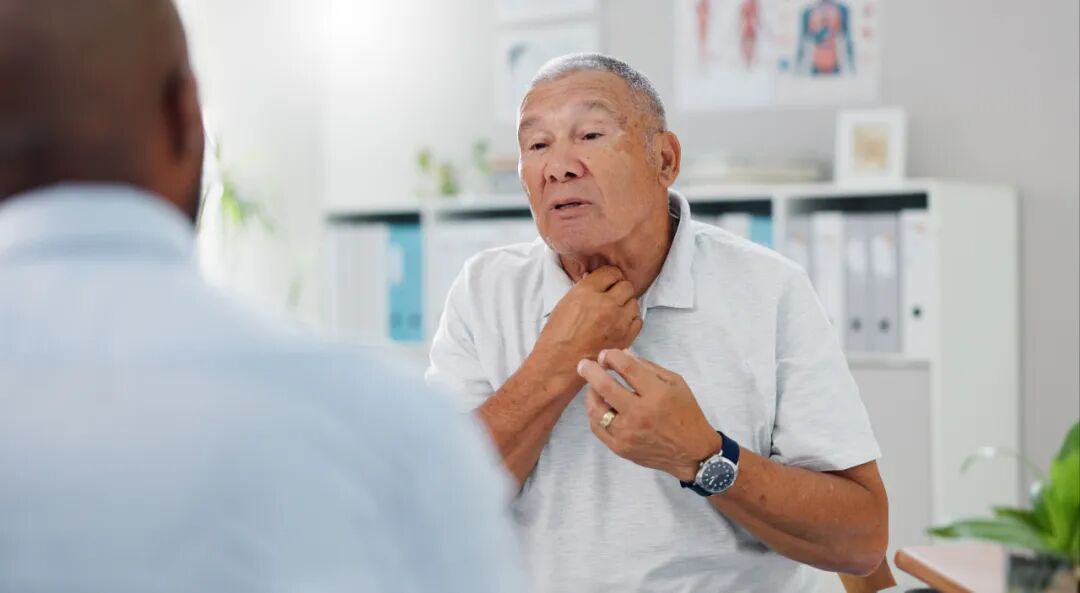
Application of vNKT cell therapy in cancer treatment
Mr. Dai is a rectal cancer patient. Initially, he only experienced symptoms such as hematochezia and changes in bowel habits, which did not attract much attention. It was not until 2013 that he was diagnosed with rectal cancer and subsequently underwent radical resection. Postoperative pathology revealed: ulcerative moderately-to-poorly differentiated adenocarcinoma, involving the entire layer of the intestinal wall and reaching surrounding adipose tissue, with visible vascular cancer thrombus and lymph node metastasis around the intestinal tract (1/12).
Following surgery, he immediately underwent 25 rounds of radiotherapy and 6 cycles of chemotherapy, which resulted in decreased white blood cell and platelet counts, weight loss, and other complications. It can be seen that in just a few months in 2013, the immune system suffered severe trauma due to surgery, radiotherapy, and chemotherapy. In the following years, he continuously developed metastatic lesions in the lungs, which were treated with surgery and cyber knife therapy, accompanied by frequent pulmonary infections. Mr. Dai began vNKT cell therapy in June 2017, and during the 7 years of immunotherapy, recurrence and metastasis ceased.
Figure (1)
Just as Mr. Dai saw a glimmer of hope in the treatment of vNKT cells during his tough battle against cancer, Mr. Yan also experienced a similar journey in his fight against illness. In January 2015, Mr. Yan noticed discomfort in his upper abdomen for 2 days and underwent a CT scan, which revealed a low-density mass lesion in the lower segment of the right lobe of the liver, measuring approximately 6.1cm*6.2cm*6.9cm, suggesting a tumor lesion. He subsequently underwent "right posterior segmentectomy and cholecystectomy." Postoperative pathology revealed: poorly differentiated hepatocellular carcinoma of the right liver, with a high degree of malignancy.
Mr. Yan did not undergo chemotherapy or radiotherapy, and within less than half a year after surgery, the liver recurred twice. He underwent three consecutive surgeries, which led to postoperative complications and slow recovery. He was deeply concerned about the impending recurrence and metastasis, and as he aged, he found it increasingly difficult to endure the physical damage caused by surgery. Therefore, he promptly sought vNKT cell therapy. The image below illustrates that Mr. Yan has been undergoing vNKT cell therapy since 2015, and his condition has remained stable without recurrence for 9 years (Figure 2). Mr. Yan's quality of life has significantly improved; he feels more energetic and reports reduced skin allergies, along with enhanced immunity.
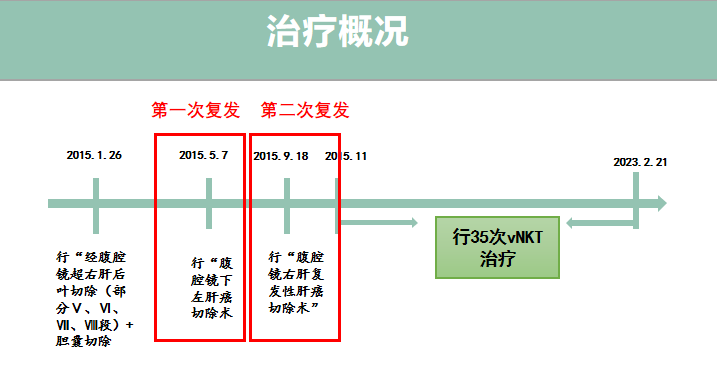
Figure (2)
It is evident that the immune system plays an extremely important role in cancer treatment. It possesses immune surveillance capabilities, continuously monitoring and promptly eliminating abnormal cells in the body, including those that have undergone malignant transformation. After cancer treatment, a robust immune system aids in the body's rapid recovery and prevents complications such as infections. In the long term, a healthy immune system can also effectively monitor and prevent cancer recurrence.
Let's take a closer look at the fascinating process of the special forces among immune cells, vNKT cells (red) fighting B16 tumor cells (green) !
Therefore, only by combining traditional treatment with immunotherapy and focusing on protecting and enhancing patients' immunity can we maximize the effectiveness of cancer treatment and ensure patients' overall health and long-term survival. I believe that in the future, with the continuous advancement of medical technology, we will be able to better harness the power of the immune system to overcome cancer, this stubborn disease.

Contact Us
Scan QR Code
to communicate with Professor Zhang Minghui's team
Click on the image to view the exciting content from previous issues
Contributed by: Zhao Tuantuan
Reviewed by: Qiao Jiacheng, Wang Ying, Gao Chen
Edited/typeset by: Zhao Tuantuan

Address: Room 1101 (Unit 101), 11th Floor, Building 1, No. 7 Courtyard, Kexueyuan Road, Life Science Park, Changping District, Beijing
Phone:010-8265 9866
Email:lehemedneo@hotmail.com