About Lehe
乐于心,和与众,与己乐,与人和; 心宽念纯,百病无生。


乐于心,和与众,与己乐,与人和; 心宽念纯,百病无生。




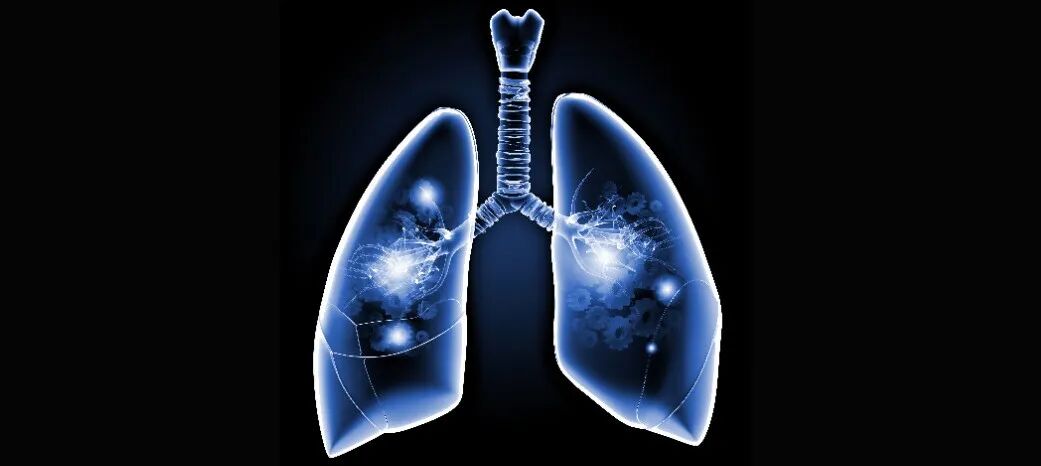
First, persistent cough that does not resolve: If someone experiences a stubborn, irritating, dry cough that does not improve after antibiotic treatment, it should be taken seriously. If the cough is accompanied by wheezing in the throat, shortness of breath, chest tightness, or a large amount of foamy phlegm, it should be highly regarded.
Second, chest pain: Relevant research shows that a high proportion of patients with lung cancer, especially those with peripheral lung cancer, experience chest pain as their initial symptom, which can reach up to 50%.
Third, joint pain: During the proliferation and differentiation process, lung cancer cells can affect the secretion of growth hormones, stimulating bone joints to proliferate, leading to joint pain, swelling, and other symptoms.
Fourth, shoulder and back pain: Peripheral lung cancer often erodes the pleura of patients and affects the chest wall tissue and ribs, causing shoulder and back pain.
Fifth, clubbed fingers: The characteristic of clubbed fingers is that the first phalanx of the fingers and toes is relatively hypertrophic, and the nails are protruding and curved, often accompanied by pain.
Sixth, hoarseness: When lung cancer metastasis compresses the laryngeal nerves, it can lead to paralysis of the vocal cord's single plate muscle, resulting in hoarseness.
Polymyositis is a common manifestation in the early stages of lung cancer: Polymyositis is also one of the common clinical manifestations in the early stages of lung cancer. Before developing typical clinical symptoms, most lung cancer patients only experience symptoms such as appetite loss and progressive generalized muscle weakness.
Source: Wang Dingjun. Persistent Cough Should Be Investigated for Lung Cancer as Early as Possible [J]. Family Life Guide, 2023, 39(09):154-155.
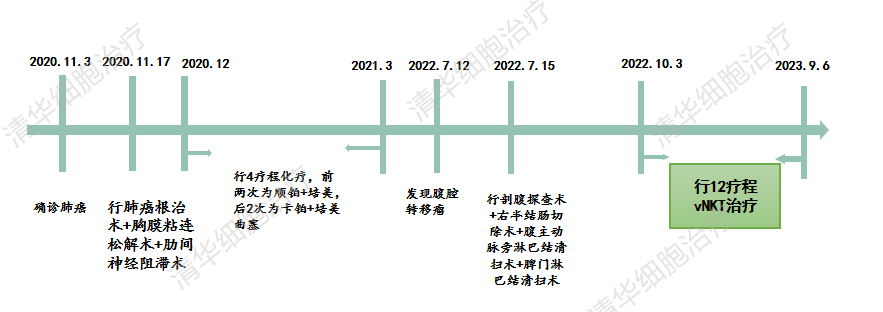
2. Post-abdominal exploratory laparotomy, pathology indicated lymph node metastasis, increasing the risk of recurrence and metastasis.
3. vNKT therapy utilizes powerful immune cells to eliminate tumor cells that may remain undetected in the body, with essentially no side effects. Combined with vNKT cell therapy after surgical treatment, it can effectively reduce the incidence of tumor recurrence.

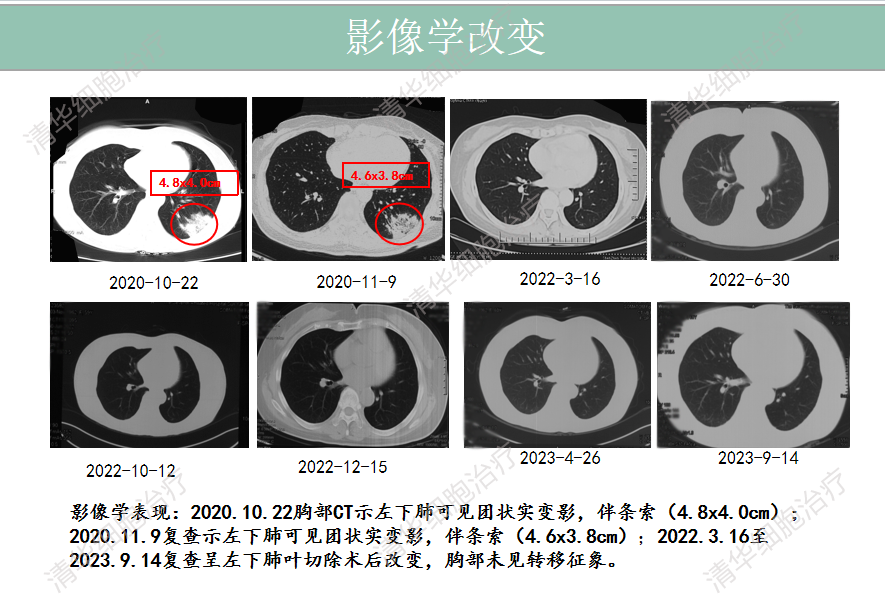
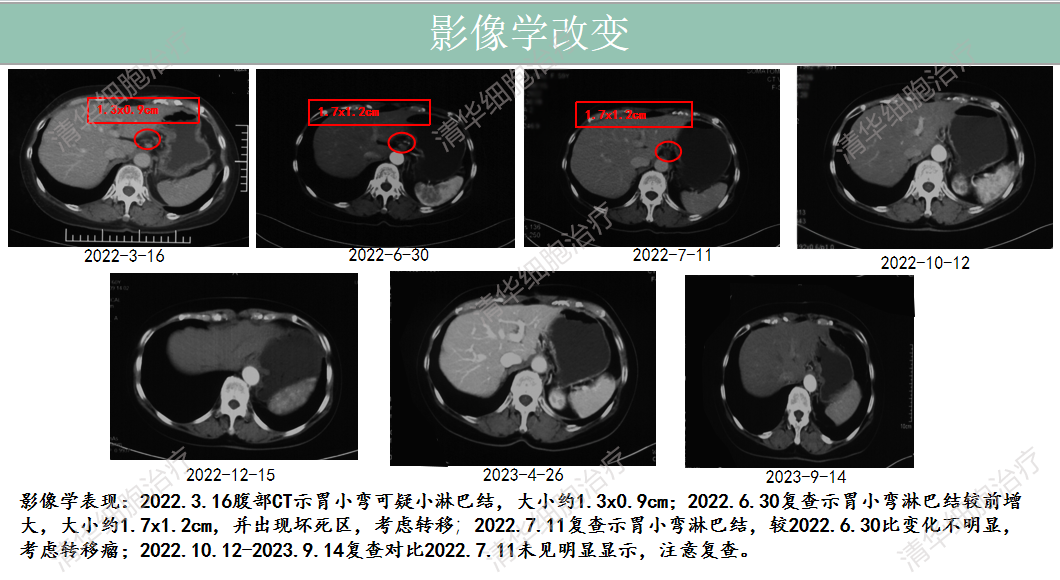
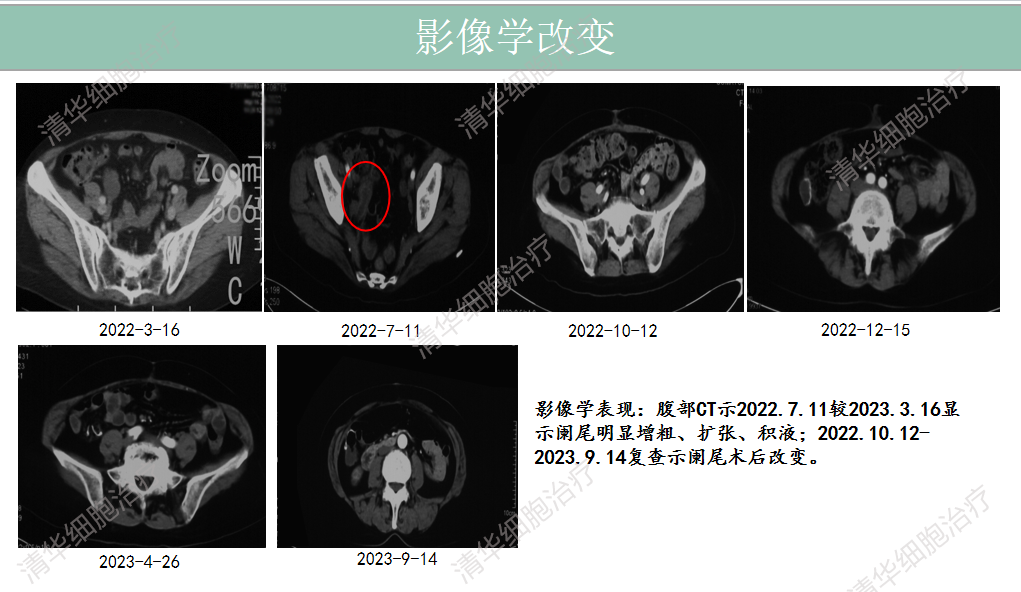
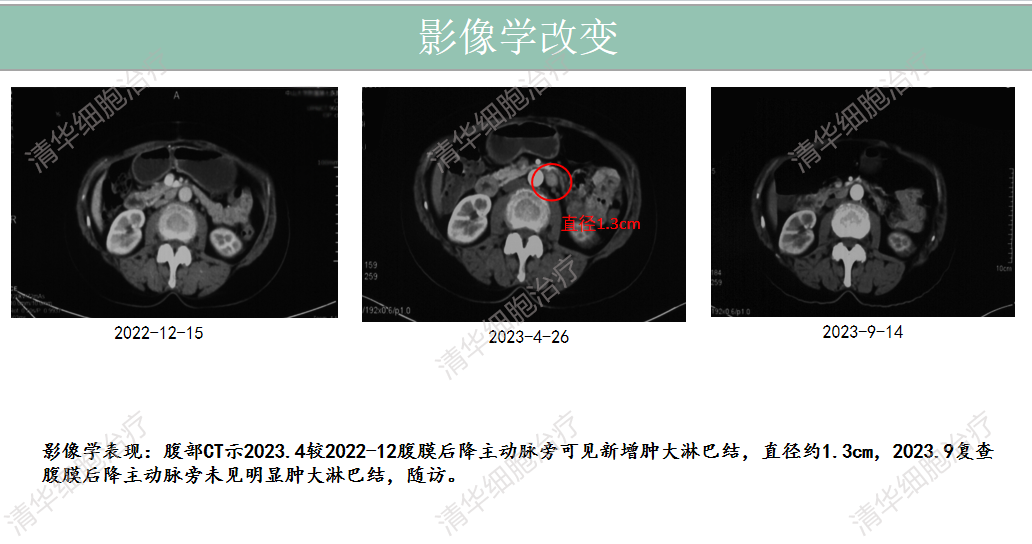

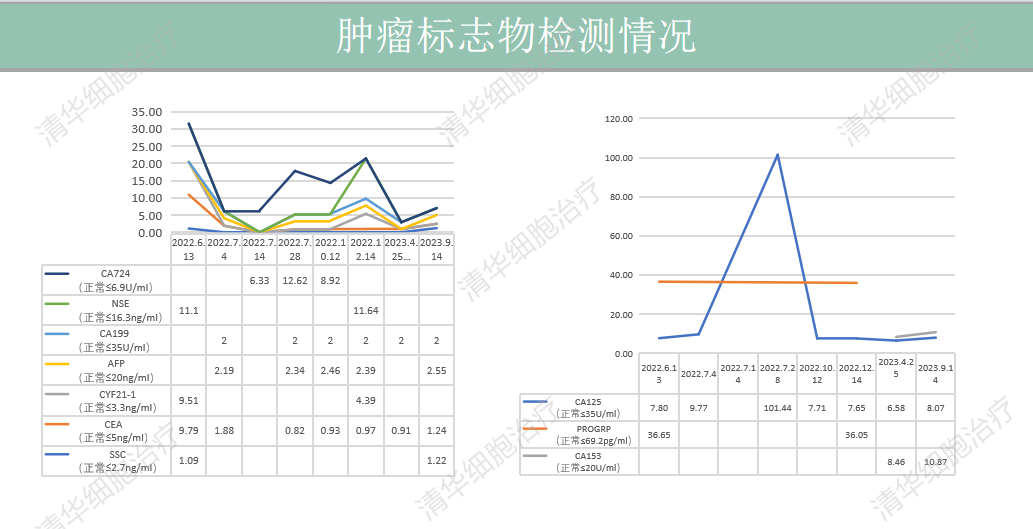
CEA: elevated on June 13, 2022, and normal during follow-up from July 4, 2022, to September 14, 2023;

References:
Click on the image
Address: Room 1101 (Unit 101), 11th Floor, Building 1, No. 7 Courtyard, Kexueyuan Road, Life Science Park, Changping District, Beijing
Phone:010-8265 9866
Email:lehemedneo@hotmail.com