About Lehe
乐于心,和与众,与己乐,与人和; 心宽念纯,百病无生。


乐于心,和与众,与己乐,与人和; 心宽念纯,百病无生。



 First evaluation: August 5, 2022
Second evaluation: February 24, 2023
Third evaluation

Advantages and Disadvantages of Targeted Therapy
Molecular targeted therapy refers to the use of drugs or other substances that target specific molecules (molecular targets) to prevent the growth and spread of cancer cells. The concept of targeted therapy originated from the "magic bullet" idea first proposed by Paul Rich in 1800, which was initially used to describe a chemical ability to specifically target microorganisms. Subsequently, this targeted approach was extended to the treatment of cancer. One of the advantages of molecular targeted therapy is its high specificity and lower toxicity compared to conventional chemotherapy. Molecular targeted therapy has proven to be effective in many types of cancer, especially non-small cell lung cancer. Approximately 75% of newly diagnosed non-small cell lung cancer patients are at an advanced stage, have lost the opportunity for surgery, and are relatively insensitive to chemotherapy. Molecular targeted therapy can successfully improve the survival rate of lung cancer patients.
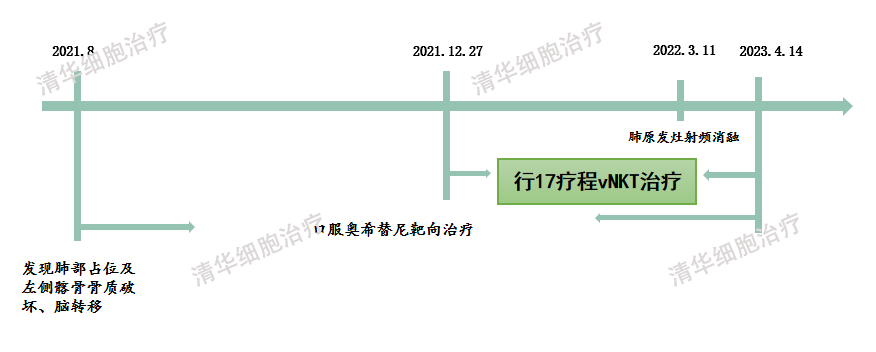
The key to the success of molecular targeted therapy for lung cancer lies in the identification of ideal targets, which can distinguish specific genetic changes between tumor cells and normal cells. Currently, targeted drugs that have been put into clinical use mainly include drugs targeting epidermal growth factor receptor (EGFR), drugs targeting echinoderm microtubule-associated protein-like 4-anaplastic lymphoma kinase fusion gene, drugs targeting vascular endothelial growth factor (VEGF), multi-targeted drugs, and some new target anti-tumor drugs. EGFR is the most common driving gene in non-small cell lung cancer, with a mutation rate of about 40-50%, especially prevalent in Asian ethnic groups. Ms. Zhang underwent genetic testing and was found to have a mutation in exon 19 of the EGFR gene, so she was treated with the targeted drug Osimertinib.
However, targeted therapy still faces many limitations and concerns, such as individual differences in treatment effectiveness. Not all patients with advanced lung cancer respond to this treatment, and even if initial results are promising, drug resistance may emerge, rendering the therapy ineffective. Alternatively, unpredictable side effects may occur, leading to a decline in quality of life, forcing patients to reduce medication or discontinue treatment, thereby losing the opportunity for treatment and hope for symptom relief and prolonged survival.
Source: Research on Adaptation Strategies for Targeted Therapy of Advanced Lung Cancer
2. The patient is currently undergoing targeted drug therapy, but due to the failure to eliminate the primary lesion, the tumor burden remains significant.
3. vNKT therapy utilizes potent immune cells to eradicate tumor cells, with essentially no side effects, making it highly patient-friendly.
4. Currently, patients have the option to undergo high-precision radiotherapy or radiofrequency ablation to eliminate the primary lesion and reduce tumor burden. Simultaneously, targeted drug therapy combined with vNKT cell therapy can be employed to maximize tumor suppression.

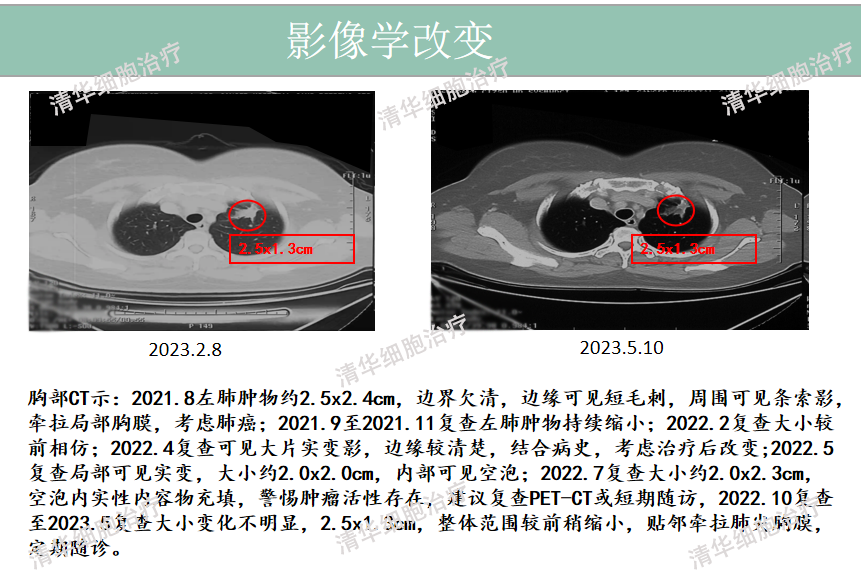
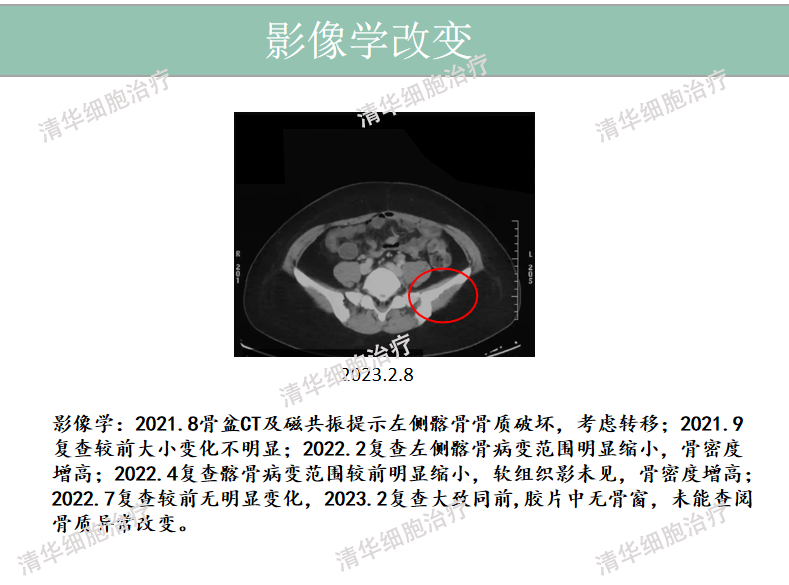
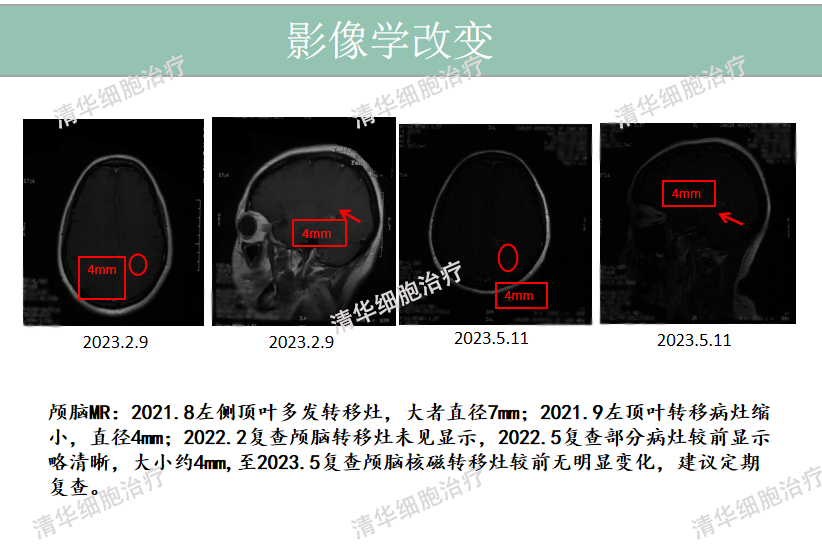
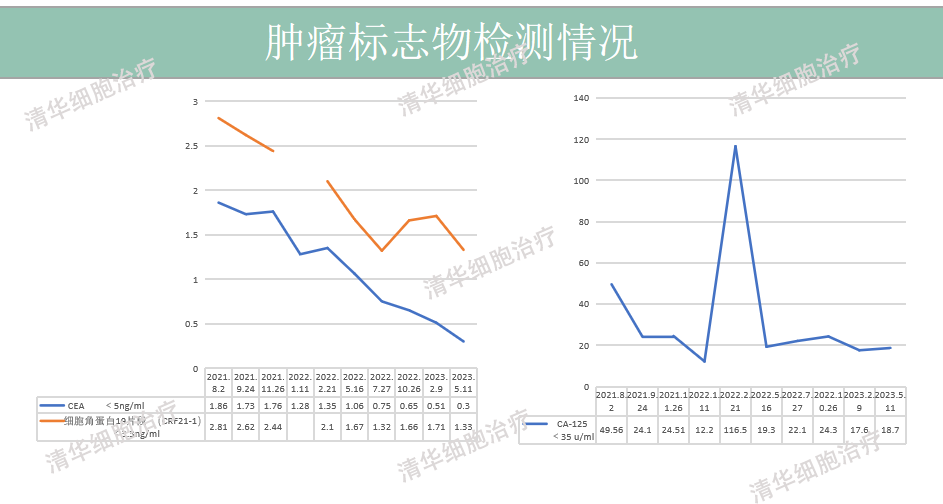
Click to view imaging data from 2021 to 2022. Second evaluation: February 24, 2023


References:
Click on the image
Address: Room 1101 (Unit 101), 11th Floor, Building 1, No. 7 Courtyard, Kexueyuan Road, Life Science Park, Changping District, Beijing
Phone:010-8265 9866
Email:lehemedneo@hotmail.com