Contact Us Careers
Other Solid Tumors

Diagnosed with malignant tumor at 22, this treatment has built a "defense line" for her again

时间:2026-04-27 人气:

If you can't understand the subsequent professional descriptions, just take two minutes to read through this text.

Overview of the disease


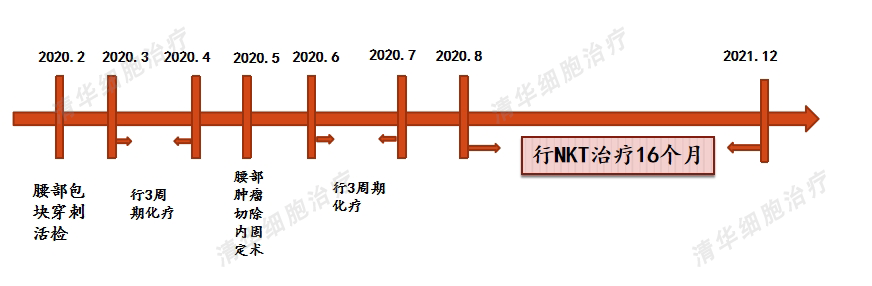
In mid-February 2020, Ms. Liu accidentally touched a mass on her right waist, about the size of a Mantou (steamed bun). Afterwards, she underwent imaging examination, which suggested the possibility of a malignant tumor. A biopsy of the lesion was performed, and the pathology report indicated synovial sarcoma.
After the diagnosis of synovial sarcoma, two cycles of chemotherapy (adriamycin + dacarbazine + ifosfamide) were administered from March to April 2020 before surgery. The mass significantly shrunk after the first chemotherapy session.
After neoadjuvant chemotherapy, Ms. Liu underwent a lumbar tumor resection at Peking University First Hospital in May 2020. Postoperative pathology revealed that the tumor cells were short spindle-shaped, atypically arranged in bundles, with mitotic figures easily visible, and focal foam histiocyte reaction, consistent with unidirectional synovial sarcoma, showing post-chemotherapy features.
Postoperatively, she received three cycles of chemotherapy with dacarbazine + ifosfamide + liposomal paclitaxel.
Department

Pu

small
Knowledge

Knowledge


Synovial Sarcoma: Synovial sarcoma is a highly malignant soft tissue tumor, commonly seen in adolescents and middle-aged patients. This tumor originates from the synovial tissue of joints, synovial membranes, and tendon sheaths. The most common sites of occurrence are the large joints of the limbs, but it can also be found in the forearm, thigh, waist, back, and other areas. The main clinical manifestation is a painless mass near the joint, which may progress to varying degrees of pain, dull ache, or dull pain, and even severe pain in the later stages, with significant pain at night. The treatment of synovial sarcoma mainly involves surgical intervention. If neoadjuvant chemotherapy is effective before surgery, it can lead to a better prognosis after surgery. Due to its origin in synovial and tendon sheath tissues, it is more likely to metastasize to the lungs via blood vessels.  
Unidirectional synovial sarcoma: Synovial sarcoma can be broadly classified into three types: unidirectional, bidirectional, and dedifferentiated. Unidirectional refers to the characteristic presence of only spindle cells, while bidirectional mainly features both spindle cells and epithelial cells, making it the most common type of synovial sarcoma. Dedifferentiated refers to the presence of small round cell components in addition to unidirectional and bidirectional types.  
Neoadjuvant chemotherapy: The "sandwich" approach of neoadjuvant chemotherapy + surgery + postoperative chemotherapy can shrink the primary lesion before surgery and eliminate invisible metastatic cells early, thereby increasing the resection rate. For some patients who cannot undergo radical surgery or preserve certain organs due to the extent of tumor invasion, neoadjuvant chemotherapy can shrink the tumor invasion and enable successful radical surgery. Furthermore, postoperative chemotherapy can reduce the risk of postoperative recurrence and metastasis.


Ms. Liu is still very young, and synovial sarcoma is highly malignant. Without other interventions, the tumor is highly likely to continue to progress. Ms. Liu is very worried about this. Through a friend's recommendation, Ms. Liu and her family learned about Professor Zhang Minghui's NKT technology from Tsinghua University School of Medicine, and carefully reviewed the demonstration cases of NKT cell therapy, particularly hoping to try it to reduce the risk of future metastasis and recurrence.

After reviewing Ms. Liu's medical records, Professor Zhang Minghui made the following analysis and judgment:
1. Synovial sarcoma generally occurs in younger patients and has a poorer prognosis, and Ms. Liu is also very young.  
2. The patient has completed neoadjuvant chemotherapy + surgery + postoperative chemotherapy, and the traditional treatment plan has been basically implemented.
3. After both surgery and chemotherapy are completed, the next step is to prevent recurrence and metastasis. NKT therapy utilizes powerful immune cells to eliminate tumor cells that may remain undetected in the body, with essentially no side effects. It is very friendly to patients and can reduce the occurrence of metastasis and recurrence.  

Ms. Liu received NKT cell immunotherapy in August 2020, and has completed 14 courses of treatment for a total of 16 months as of December 2021. During this period, multiple follow-up examinations showed no signs of significant tumor progression, and the overall assessment is stable!

Image aspect
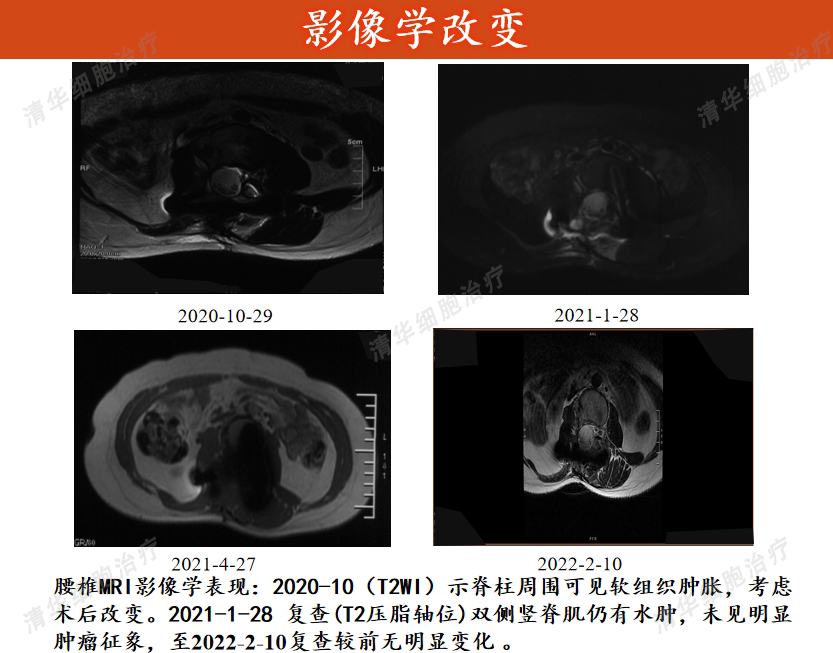
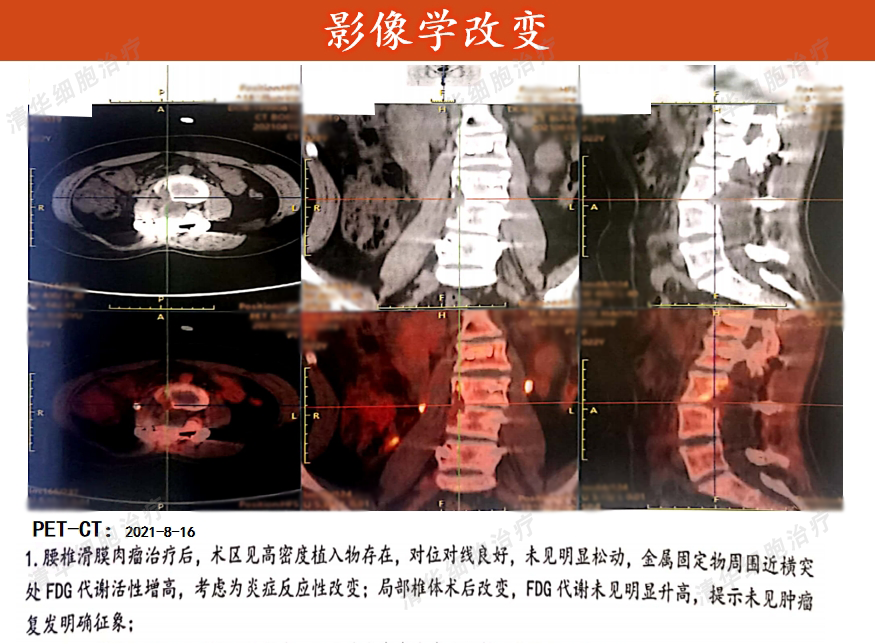
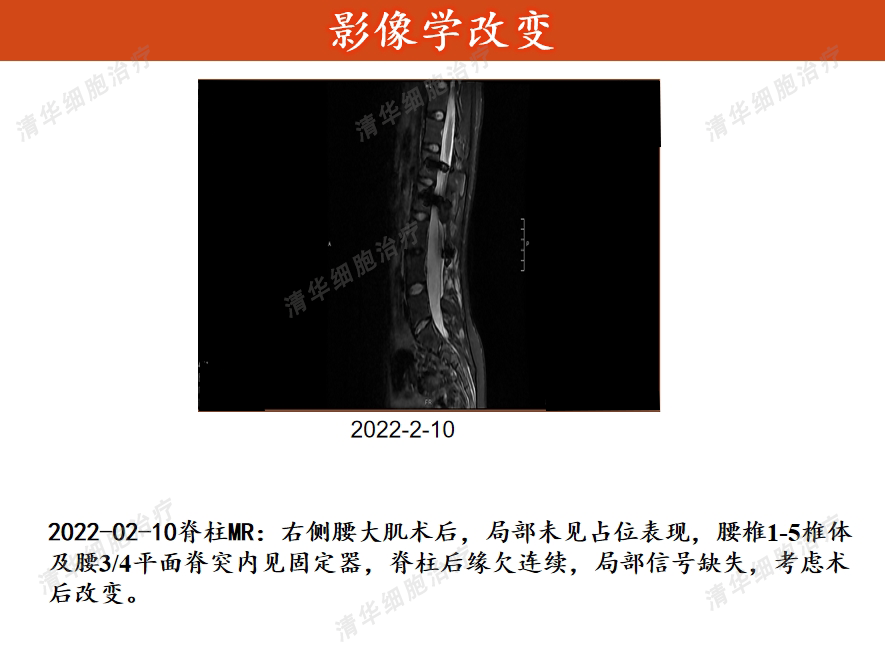
Imaging examination: Reexamination of whole-body PET-CT in August 2021 showed no signs of recurrence or metastasis; Reexamination of lumbar MRI from October 2020 to February 2022 showed no space-occupying lesion on the right side of the psoas major muscle after surgery, with internal fixation devices visible in the lumbar vertebrae 1-5 and lumbar 3/4 level spinous processes, considered as postoperative changes.

Quality of Life


Ms. Liu's quality of life has been greatly improved. Her mental state is excellent, and she feels more energetic and vigorous than before, returning to her pre-illness state. She can lead a normal life and work without being affected by the disease.

Conclusion    Discussion


Ms. Liu achieved the expected results after adopting the NKT cell therapy method. After more than a year of treatment for synovial sarcoma, a highly malignant tumor, the latest assessment result remains stable with no progression observed.
Popular science knowledge is provided for reference only. For individual patients, clinical treatment should prevail.                    
Classic NKT case review
Click on the image
to view