Contact Us Careers
Other Solid Tumors

Rare! An 86-year-old man diagnosed with four primary cancers! Now, no recurrence for 42 months

时间:2026-04-27 人气:


If you cannot understand the subsequent professional descriptions, you can finish reading this text in two minutes


Disease Overview


 
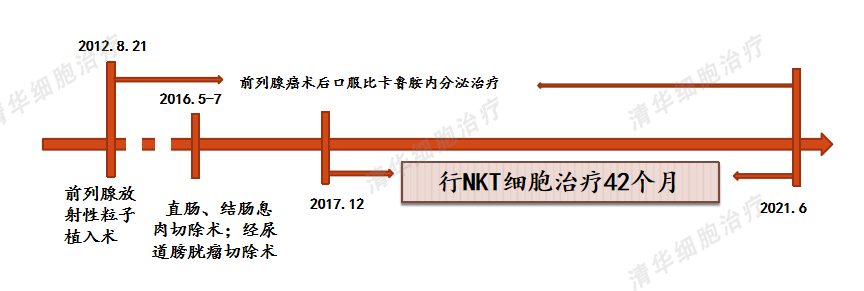
Cases of four primary cancers are extremely rare. Mr. X's case was presented in 2020. Now, after a year, how is he doing? (Click to view previous cases 1. He has been living with four types of cancer for nearly four years. How did he manage to do so? 2. One person with four types of cancer at the same time! After NKT treatment, how is the patient doing now? 3. Prostate cancer/bladder cancer/rectal cancer triple primary, NKT treatment case presentation ) Mr. X, now 86 years old, was diagnosed with four primary cancers—prostate cancer, bladder cancer, rectal cancer, and lung cancer—from 2010 to 2016. Such a situation is extremely rare in clinical practice.
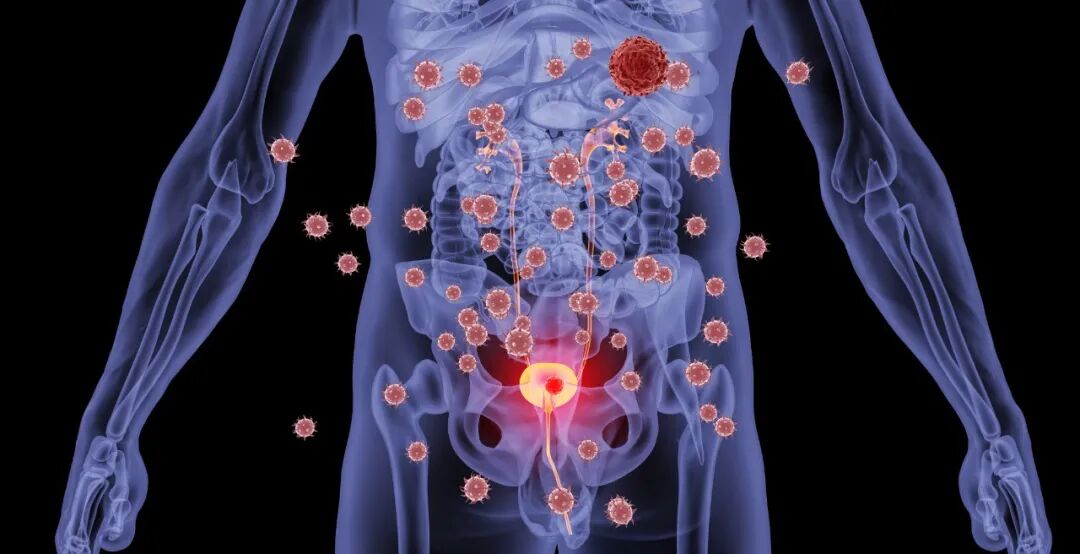
The emergence of malignant tumors is often caused by multiple factors. When Mr. X was young, he was one of the first students in the Department of Engineering Physics at Tsinghua University and participated in many experiments related to nuclear physics. He recalled that the experimental protective facilities were rudimentary at that time, especially below the abdomen, which was not well protected. Therefore, exposure to radiation should be the main reason for the development of four primary tumors.
In fact, cancer cells can also appear in normal human bodies. As long as the body is in an "ordered" state, our immune system can detect and eliminate these abnormal cells. However, when the immune system becomes "dysfunctional" or the body is in a "disordered" state, cancer cells in the body cannot be completely eliminated. These "fish that escape the net" will accumulate and develop into uncontrollable malignant tumors.
Considering the patient's advanced age, multiple primary tumors, and previous multiple surgical treatments, his physical tolerance is poor. Any of the multiple tumors in Mr. X's body has the potential for further progression - especially the lung tumor, which has not undergone any anti-tumor treatment before. Mr. X and his family are very worried about this and hope to use conservative treatment methods.


Also, because Mr. X is an old alumnus of Tsinghua University, he quickly contacted Professor Zhang Minghui from the Tsinghua University School of Medicine, especially hoping to try treatment with NKT technology, which would not increase additional physical burden and address future risks.
After reviewing Mr. X's medical records, Professor Zhang Minghui made the following analysis and judgment:
1. The patient has multiple primary tumors, with previous radical treatments for prostate cancer, bladder cancer, and rectal cancer, respectively. However, considering the patient's advanced age, weak constitution, and multiple primary tumors, continuing with traditional aggressive treatment methods (such as surgery, radiotherapy/chemotherapy, etc.) may be too much for him to tolerate.   
2. The lung lesion has not been treated, posing a high risk of progression. Due to the patient's "tumor-prone constitution", there is also a high risk of recurrent metastasis to other sites.   
3. NKT cell therapy utilizes the powerful tumor-killing ability of NKT cells to enhance the "monitoring" and "defense" functions of the entire immune system - microscopically killing those tiny residual tumor cells, and macroscopically observing the effect of preventing (delaying) recurrence and metastasis in patients. At the same time, cellular immunotherapy has no side effects and does not increase the burden on patients' bodies.    
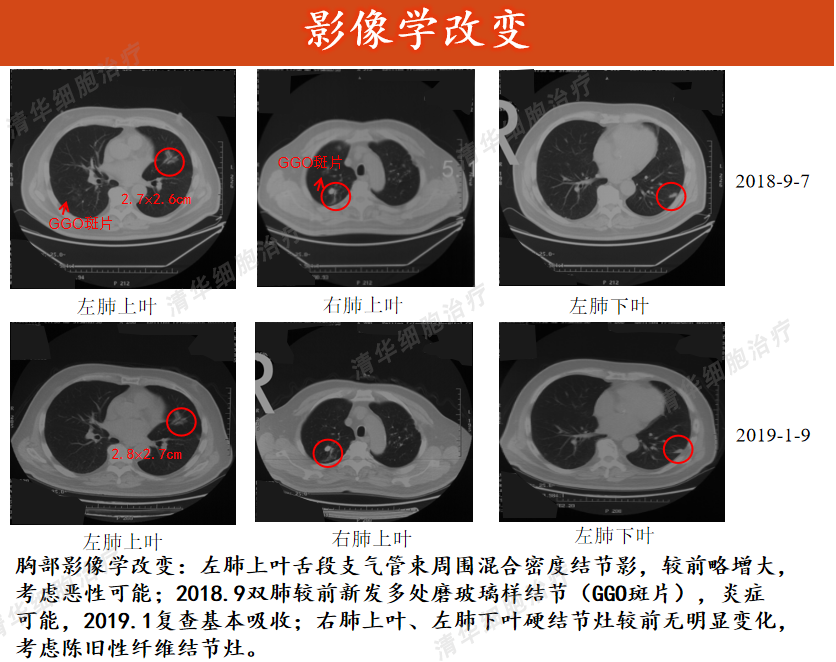
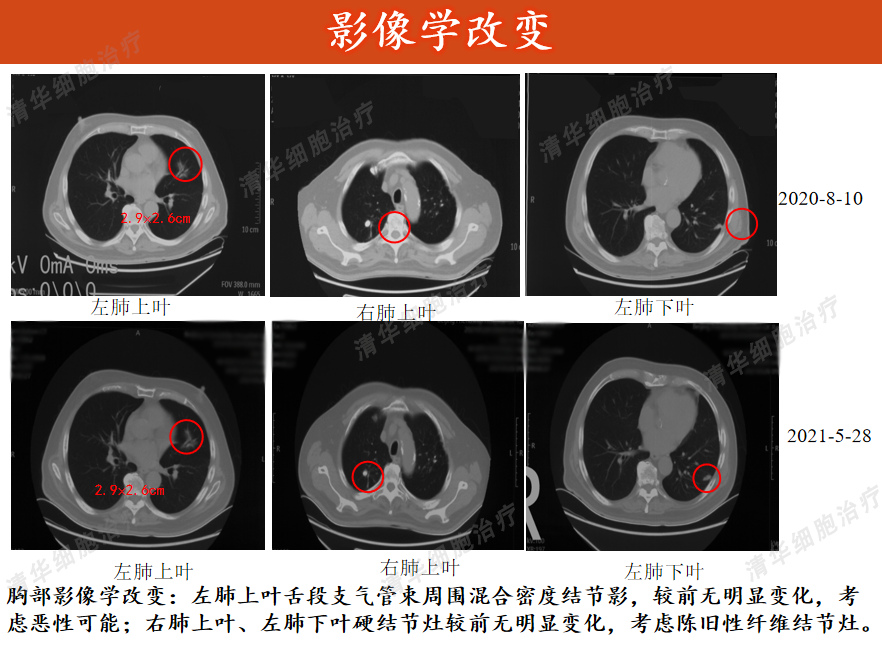
Mr. X concurs with the above viewpoint and has been undergoing NKT cell immunotherapy since December 2017, with a regimen of one treatment course per month. As of June 2021, he has completed one treatment course lasting 31 months (a total of 42 months). The ground-glass nodule in his left upper lung has slightly increased compared to previous findings, and the overall assessment is stable disease (SD).


Image aspect


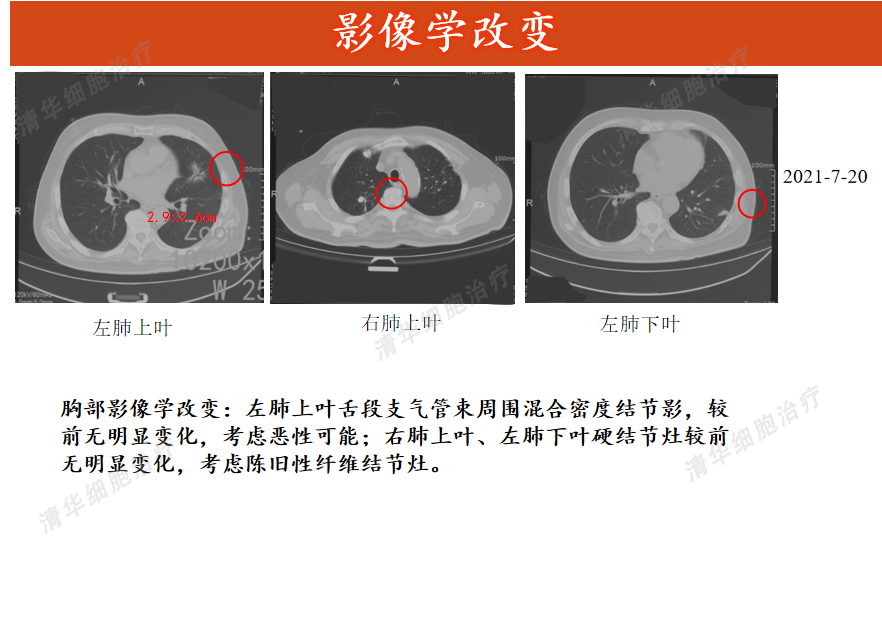
From May 2019 to July 2021, the follow-up examination showed no significant changes, and the lung lesion was assessed as stable disease (SD).


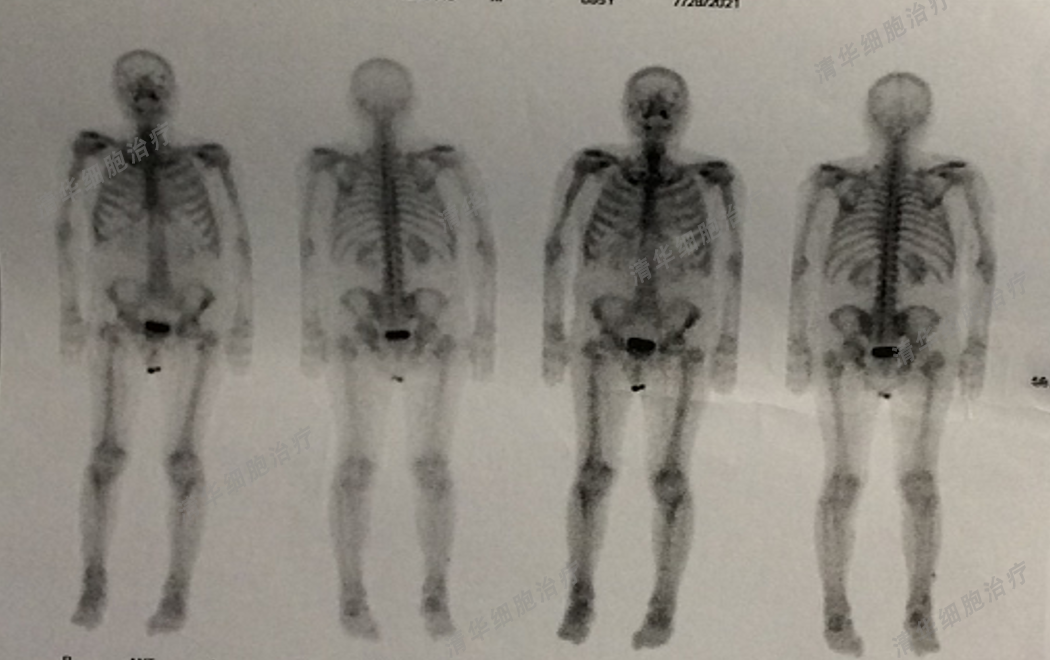
Whole-body bone scan results: 1. No metastatic tumor manifestation in the whole body bones; 2. Increased metabolic activity in the maxilla and mandible, likely indicating inflammatory lesions; 3. Reduction and disappearance of original multi-joint degeneration.


Tumor markers


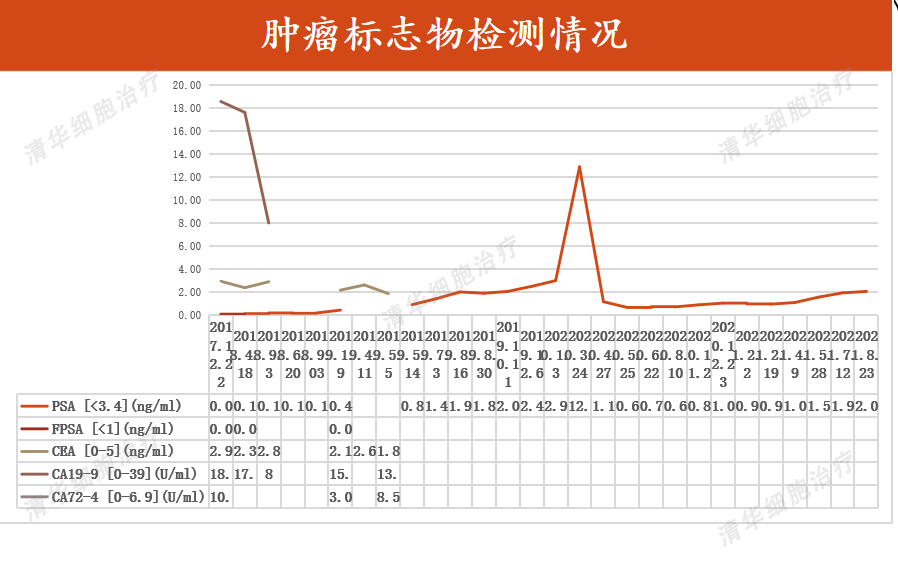
The patient's tumor markers, CEA and CA19-9, are within the normal range (not checked in April and May 2019); CA72-4 increased in December 2017, returned to normal levels in January 2019, and slightly increased in May 2019; PSA levels were checked from July 2017 to August 2021, with no significant abnormalities except for an increase in March 2020, and changes should be monitored.


Quality of Life


The patient's life treatment has improved compared to before, and he reported that his immunity has increased. The current quality of life score is 65 points.


   Conclusion  


Conventional treatments for multiple primary tumors are challenging, and multiple surgeries and postoperative chemotherapy can impose a significant burden on patients. However, NKT cell therapy starts with the immune system, utilizing NKT cells to eliminate tumor cells while causing almost no side effects. After 42 months and 31 courses of treatment, Mr. X showed no signs of recurrence or metastasis, and his overall condition was assessed as stable.


Popular science knowledge is provided for reference only, and individual patients should follow clinical medical advice.                    

NKT classic case review

Click on the image

to view