Contact Us Careers
Stomach Cancer

For poorly differentiated adenocarcinoma of the stomach, this adjuvant therapy can delay recurrence and metastasis

时间:2026-04-22 人气:

If you find it hard to understand the subsequent professional descriptions, just take two minutes to read through this text.

Overview of the condition


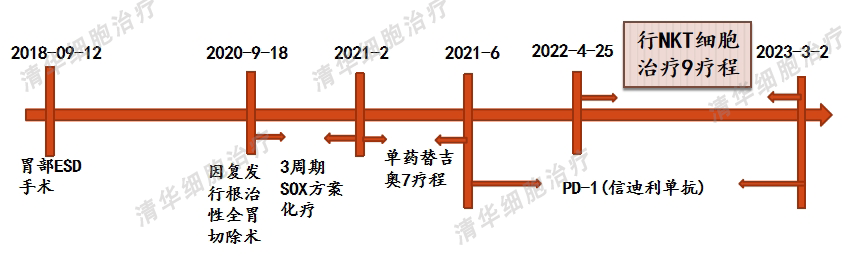
Ms. Zhang underwent a physical examination in September 2018, which revealed abnormal gastric mucosal findings. Subsequent gastroscopy indicated gastric cardia adenocarcinoma. Pathological diagnosis: (gastric fundus) heteromorphic cells were observed in the submitted tissue, and combined with immunohistochemical staining results, adenocarcinoma was supported. The cancer tissue invaded the submucosal layer, and no intravascular thrombus was observed. Endoscopic submucosal dissection of the gastric fundus was performed in September 2018. Postoperative pathology: heteromorphic cells were observed in the (gastric fundus and gastric cardia) submitted tissue, and combined with immunohistochemical staining results, adenocarcinoma was supported. The cancer tissue invaded the submucosal layer, and no intravascular thrombus was observed.
In September 2020, Ms. Zhang experienced weight loss, poor appetite, and an elevated CA724 level to over 20. Gastroscopy revealed recurrence. Radical total gastrectomy was performed in September 2020. During the operation, the main lesion was found to be 10cmx6cmx0.5cm in size. Postoperative pathology: gastric adenocarcinoma, poorly differentiated, infiltrating the serosal layer, with visible intravascular thrombus and nerve invasion, and lymph node metastasis 5/22.
Immunohistochemical results: PD-L1 (22C3) CPS20. Gene testing revealed a skipping mutation in exon 14 of MET. After three cycles of SOX chemotherapy, severe bone marrow suppression occurred in February 2021, leading to a switch to single-agent temozolomide for seven courses until June 2021. Due to severe bone marrow suppression, treatment was switched to PD-1 (durvalumab) and has been continued since then.
Department
Pu
Small
Knowledge

Recognition


Poorly differentiated adenocarcinoma

A poorly differentiated adenocarcinoma indicated by gastroscopy biopsy suggests a potentially poor prognosis, as the degree of differentiation reflects the malignancy of the tumor in pathological classification. Canceration of normal cells generally occurs during the transformation from stem cells to normal cells. The lower the degree of differentiation, the closer the tumor cells are to stem cells and the greater the difference from normal cells. This also results in stronger proliferative capacity, stronger mutation capacity, stronger self-repair capacity, and stronger resistance to chemotherapy and radiotherapy. Conversely, high differentiation indicates that the tumor cells are more similar to normal cells, which means the malignancy of the tumor is relatively low and the possibility of metastasis is relatively small.

Ms. Zhang's gastric cancer was discovered early, but it still recurred, which made her more worried. Through a friend's introduction, Ms. Zhang and her family learned about Professor Zhang Minghui's NKT technology at Tsinghua University School of Medicine and carefully reviewed the displayed cases of NKT cell therapy, particularly hoping to try it to reduce the risk of tumor recurrence and delay the occurrence of recurrence and metastasis.
After reviewing Ms. Zhang's medical records, Professor Zhang Minghui made the following analysis and judgment:
1. The patient was diagnosed with early-stage cancer through a physical examination and underwent treatment. The postoperative staging was early, and ESD surgery was chosen for the stomach. However, the disease recurred two years later.
2. After recurrence, the tumor underwent radical surgery, but the pathological results were even more pessimistic than two years ago. Low-differentiated adenocarcinoma, with visible intravascular cancer thrombus, nerve invasion, and metastatic cancer in lymph nodes, all indicate a poor prognosis.  
3. NKT therapy utilizes powerful immune cells to eliminate tumor cells that may remain undetected in the body, with essentially no side effects. After completing surgical treatment, it can be combined with various other therapies to achieve a stable outcome.  

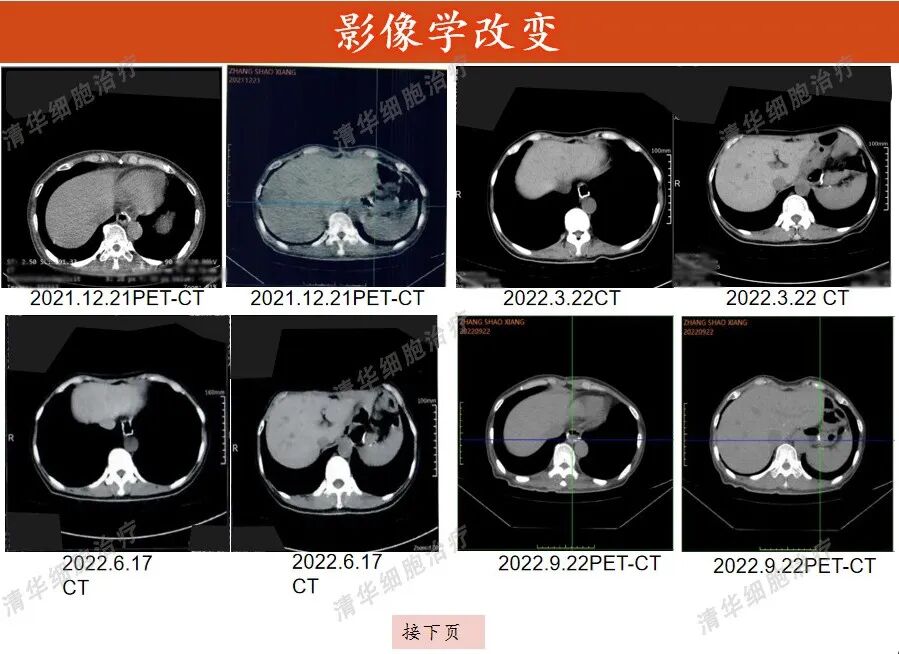
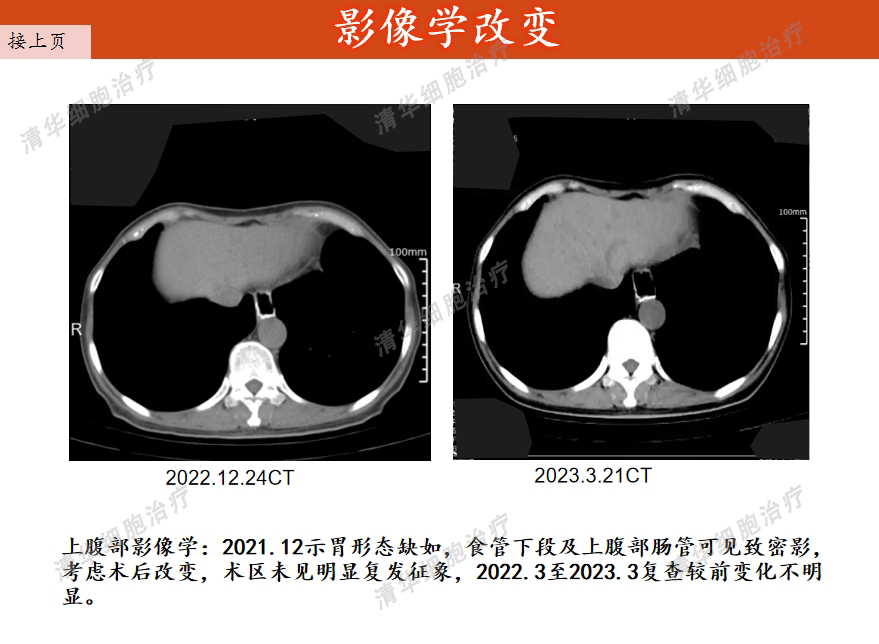
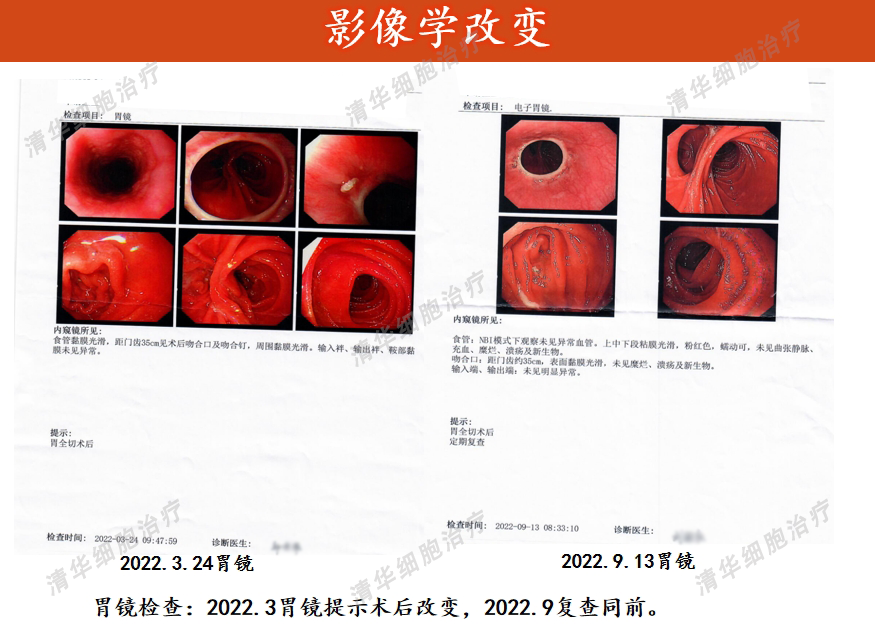
Ms. Zhang decided to undergo NKT cell immunotherapy in April 2022, with an initial regimen of one course per month. By March 2023, she had undergone a continuous systematic treatment of nine courses, during which three follow-up examinations showed no significant signs of progression.


Image Aspects


Tumor markers


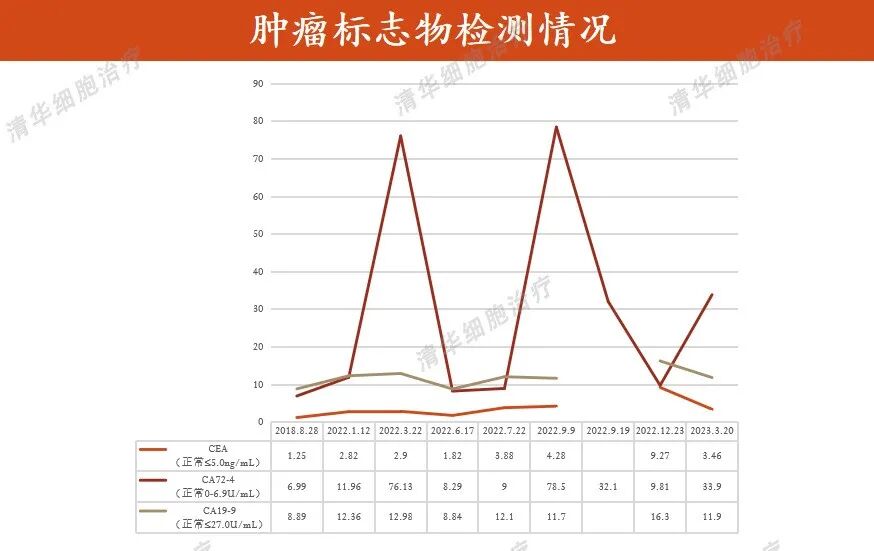
From August 2018 to March 2023, both CEA and CA19-9 were within the normal range, with CEA slightly higher than normal in December 2022; CA72-4: from August 2018 to March 2023, it was higher than normal, showing intermittent increases, requiring close observation.


 Conclusion and Comments


Ms. Zhang achieved the expected results after adopting the NKT cell therapy method. After a year of follow-up, there was no tumor recurrence or metastasis, and her quality of life improved. She is in excellent mental condition and feels more energetic than before.
In addition to the depth of gastric wall infiltration and the status of lymph node metastasis, the histological type, including well-differentiated or poorly differentiated types, should also be evaluated in the treatment of gastric cancer. Patients with well-differentiated tumors have a higher 5-year survival rate than those with poorly differentiated tumors (83% vs. 59%; P=0.086). Multivariate analysis indicates that among the pathological variables of tumors, histological type is important for evaluating tumor progression and prognosis in patients with gastric cancer. Poor differentiation is one of the independent prognostic factors.
Ms. Zhang experienced postoperative recurrence of early gastric cancer. In order to achieve long-term stability, she chose NKT cell therapy and achieved the expected results. In this process, NKT cell immunotherapy played an indispensable role in reducing the risk of recurrence and metastasis and strengthening the immune system, thereby providing patients with long-term stability.
Popular science knowledge is provided for reference only. Individual patients should seek clinical medical advice.   

Reference:< H362>

【1】First Department of Surgery, Oita Medical University, Oita, Japan.

NKT Classic Case Review

Click on the image

to view< H390>