Leave your message or request below and we will get back to you as soon as possible.
vNKT clinical trial · patient screening form
We are conducting a clinical study on vNKT immunotherapy. This form is for preliminary screening only; saving it does not mean enrollment. Information is used for screening only; separate informed consent will be signed before formal enrollment.
Part 1: Basic information
2. Sex
years
4. Nationality
Part 2: Disease and medical history
9. Treatments received (multiple choice)
10. Performance status (ECOG reference)
Part 3: Initial screening criteria
11. Are you 18 years of age or older?
12. Are you willing to participate and able to sign informed consent?
13. Known severe allergy, especially to biological products or monoclonal antibodies?
14. Active, uncontrolled severe infection (e.g. HBV, HCV, HIV, syphilis)?
15. Severe uncontrolled cardiac disease (e.g. NYHA III–IV), lung disease, or other major organ dysfunction?
16. Active autoimmune disease or need for systemic immunosuppression?
17. Pregnant or breastfeeding?
18. Participated in another drug or device trial within the past 6 months?
Part 4: Self-report and additional information
20. What do you hope to achieve through this immunotherapy study? (multiple choice)
Tip: For extensive records, you may contact the clinical study coordinator to submit pathology, imaging, or discharge summaries.
After being diagnosed with two types of cancer within a year, he, who was "favored" by tumors, broke the curse by adopting "adjuvant" therapy
时间:2026-04-27 人气:
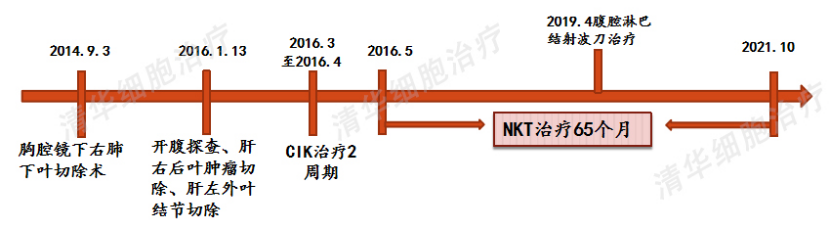
If you cannot understand the subsequent professional description, you can read this paragraph in two minutes. Intrahepatic cholangiocarcinoma accounts for only 5% of primary liver cancer types, but its malignancy is relatively high. The overall survival rate after surgery is nearly one and a half times lower than that of hepatocellular carcinoma.< H7>[1]。 Mr. Wang is a dual primary cancer patient who not only suffers from cholangiocarcinoma but also from lung adenocarcinoma. He has been stable for nearly 6 years now (Click the link to view[Hepatobiliary Cell Cancer, NKT Treatment Case Exhibition] Tsinghua NKT · Lehe Family and Friends 2016-43 ), greatly exceeding his original survival expectations. Let's take another look at his situation this year. Overview In early 2014, Mr. Wang underwent surgery to remove a shadow in the lower lobe of his right lung during a physical examination, and was diagnosed with lung adenocarcinoma through pathology. In mid December 2015, due to lung cancer, a CT scan was re examined, but a liver mass was unexpectedly discovered. After timely surgery, pathological examination showed intrahepatic cholangiocarcinoma with cancer thrombus visible in the vessels, and the staging was T3NxMx.
Just a year apart, Mr. Wang developed two primary cancers. He is like the commonly mentioned "cancer-prone constitution," with an internal environment suitable for tumor growth. According to the standards, patients like Mr. Wang, who are "favored" by tumors, must undergo chemotherapy to suppress the activity of residual cancer cells after surgery. However, he is fearful of chemotherapy, depressed, and has a very negative attitude towards traditional treatment methods. His family members were very worried and, through a friend's recommendation, contacted Professor Zhang Minghui's team at Tsinghua University School of Medicine, hoping to try NKT cell immunotherapy. After comprehensively analyzing Mr. Wang's condition, Professor Zhang Minghui believed that although surgery had "dismantled the bomb" in a timely manner, Mr. Wang had dual primary cancers and had not undergone conventional treatments such as chemotherapy. Furthermore, the pathology showed the presence of "vascular cancer thrombus," indicating a very high risk of recurrence and metastasis in the future! Mr. Wang's susceptibility to tumors is also closely related to the dysfunction of his immune system. Addressing the issue from an immunological perspective, by enhancing his own ability to fight tumors to reduce the risk of metastasis and recurrence, achieving effective prolongation of progression-free survival (PFS) is Mr. Wang's next treatment goal.
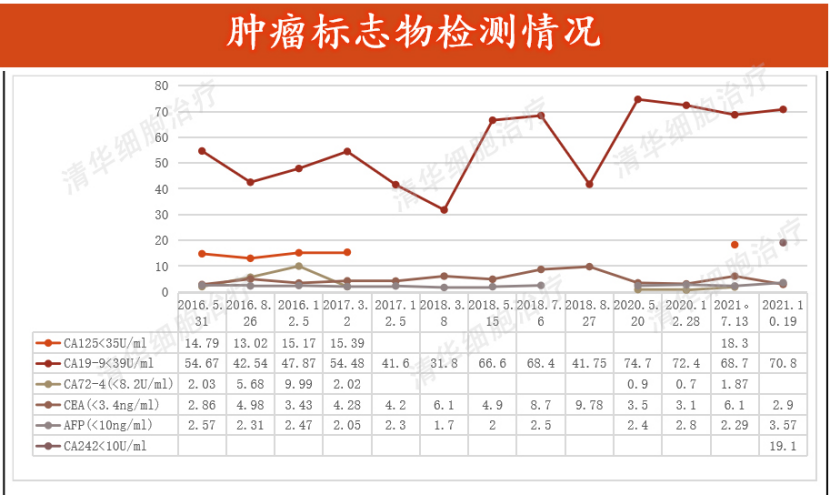
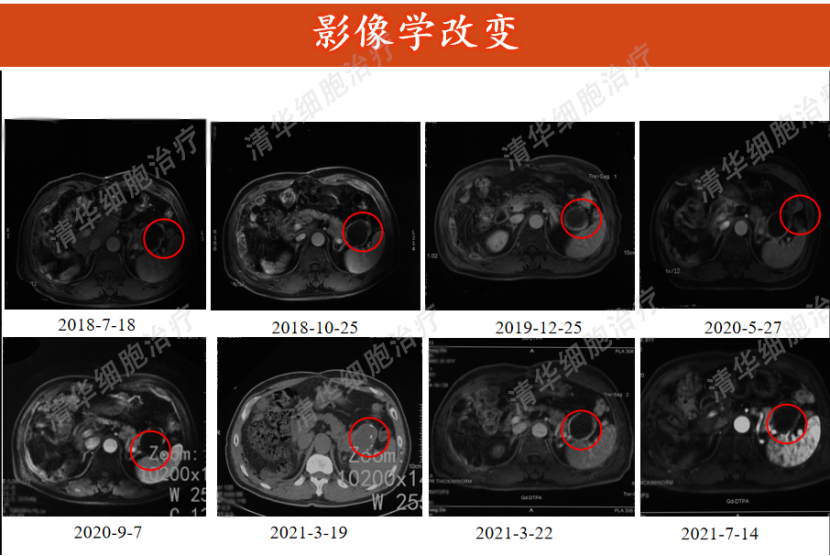
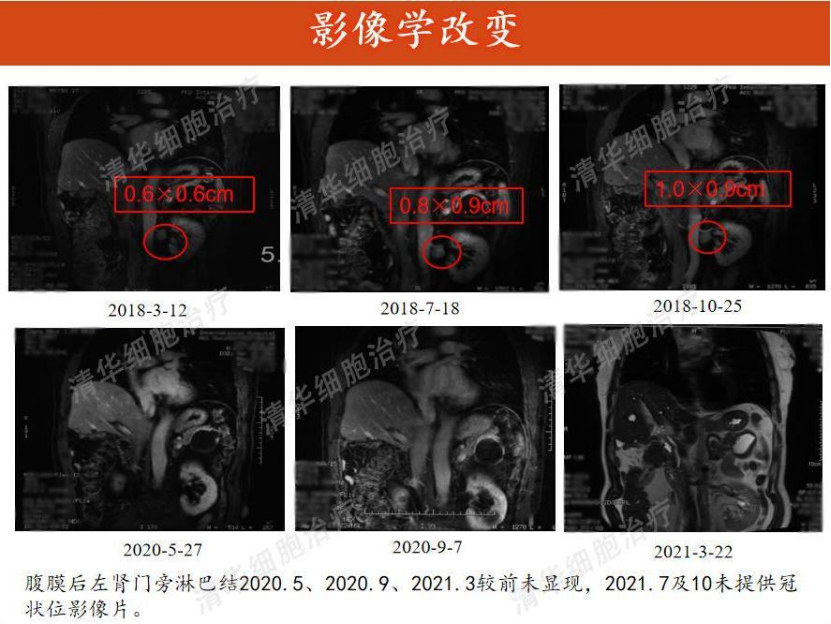
Although NKT cell immunotherapy is still defined as an "adjuvant" treatment method in clinical practice, based on our team's many years of treatment experience and accumulated cases (click the link to view NKT technology ten years in the making: it's time to show our results! ), proving that achieving Mr. Wang's treatment goals is entirely possible! Plus, cellular immunotherapy is patient-friendly, with no significant side effects, Mr. Wang and his family gladly agreed and underwent their first infusion in May 2016, following a 4+4 regimen. After multiple evaluations showed no progress, the regimen was changed to 6 courses per year. Observant readers may notice that Mr. Wang experienced a metastasis of abdominal lymph nodes during this period. Does this mean that cellular immunotherapy has failed? Actually, it does not. Occasional fluctuations in malignant tumors are present, but such fluctuations can be dangerous. The ultimate goal of immunotherapy is to suppress these "fluctuations" and make cancer cells increasingly indolent. When cancer cells are aggressive, we can combine other treatment methods for precise strikes. Just like how Mr. Wang used cyber knife to remove the enlarged lymph nodes and immediately followed up with NKT cell immunotherapy to maintain the treatment — the tumor never reappeared, and imaging has shown no clear signs of tumor recurrence to date. Nearly six years have passed since then, and 40 courses (65 months) have been completed. Facts have proven that their initial choice was correct! Tumor markersAFP remained within the normal range during treatment; although there were fluctuations in tumor markers such as CA72-4, CEA, and CA19-9, they all remained within the normal range. ImagingFrom May 2016 to October 2021, no clear signs of tumor recurrence or metastasis were observed during follow-up imaging examinations. Quality of LifeDuring the nearly 6 years (65 months) of treatment, Mr. Wang exhibited excellent quality of life, with good appetite and sleep, significantly improved physical strength, and regular physical exercise. His mental state was also very good, with a quality of life score of 87 points.ConclusionMr. Wang has dual primary malignant tumors, namely lung adenocarcinoma and intrahepatic bile duct cell carcinoma, with metastasis. Even after surgical treatment for intrahepatic bile duct cell carcinoma, the 3-year survival rate for patients is only 40%-50%. However, after undergoing 40 courses of NKT cell therapy, Mr. Wang's condition was effectively controlled, and subsequent follow-up and imaging examinations showed no clear signs of tumor recurrence.Let us look forward to the follow-up presentation next year.References: [1] Tang Zhaoyou. Modern Oncology [M]. Third Edition Shanghai: Fudan University Press, 2011-7: 900.